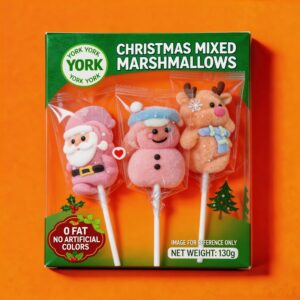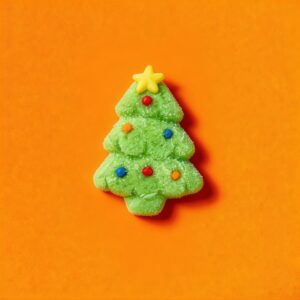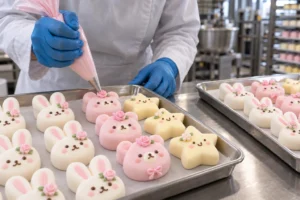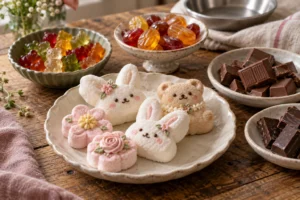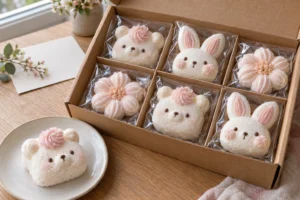
Your candy lineup1 needs something new. Plain marshmallows feel outdated, chocolate is everywhere, and gummies are oversaturated. You need a product with a texture experience that stops customers in their tracks.
Sugar-coated marshmallows2 — with their signature crispy outside and soft, fluffy inside — are rapidly becoming one of the most sought-after confectionery textures3 in the wholesale market. The contrast between the crunchy sugar shell and the pillowy marshmallow center creates a dual-texture experience4 that consumers find addictive. For buyers, the real advantage is that this coating also extends shelf life5, reduces stickiness, and makes the product far more durable during shipping — solving multiple business problems with a single production technique.
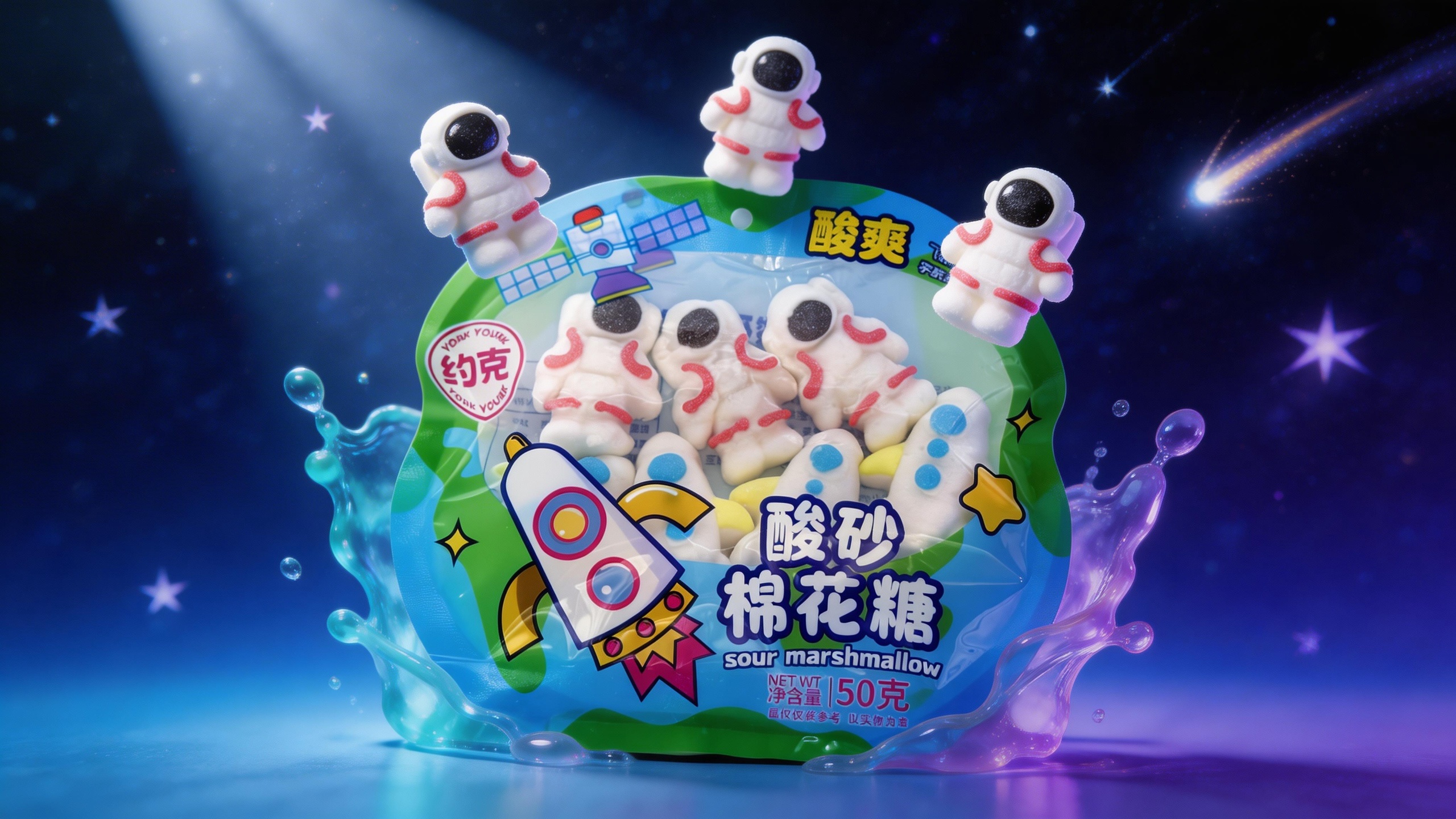
I've been making shaped marshmallows for years, and when we first introduced our sugar-coated line6, the reaction from buyers genuinely surprised me. They weren't just excited about the taste — though the crunch-to-soft ratio is genuinely satisfying. They were thrilled about the practical benefits. No more sticky marshmallows clumping together in the bag. No more crushed shapes during transit. No more short shelf lives forcing markdowns. The sugar shell solved problems that had plagued their marshmallow products for years. Let me break down exactly what makes this product so special, from the texture science to the business case.
Why Does the "Crispy Outside, Soft Inside" Texture Sell So Well?
Standard marshmallows offer one texture: soft. Customers know exactly what they're getting, and there's no surprise. In a market where novelty drives sales7, a one-note product struggles to stand out.
The sugar coating creates an unexpected sensory contrast8 — a light, crystalline crunch that gives way to a soft, pillowy center. This "two textures in one bite" experience is the same principle behind hugely successful products like Ferrero Rocher9 and mochi ice cream. It's a simple trick that makes the eating experience dramatically more memorable, creating the kind of "I can't stop eating these" response that drives repeat purchases10.
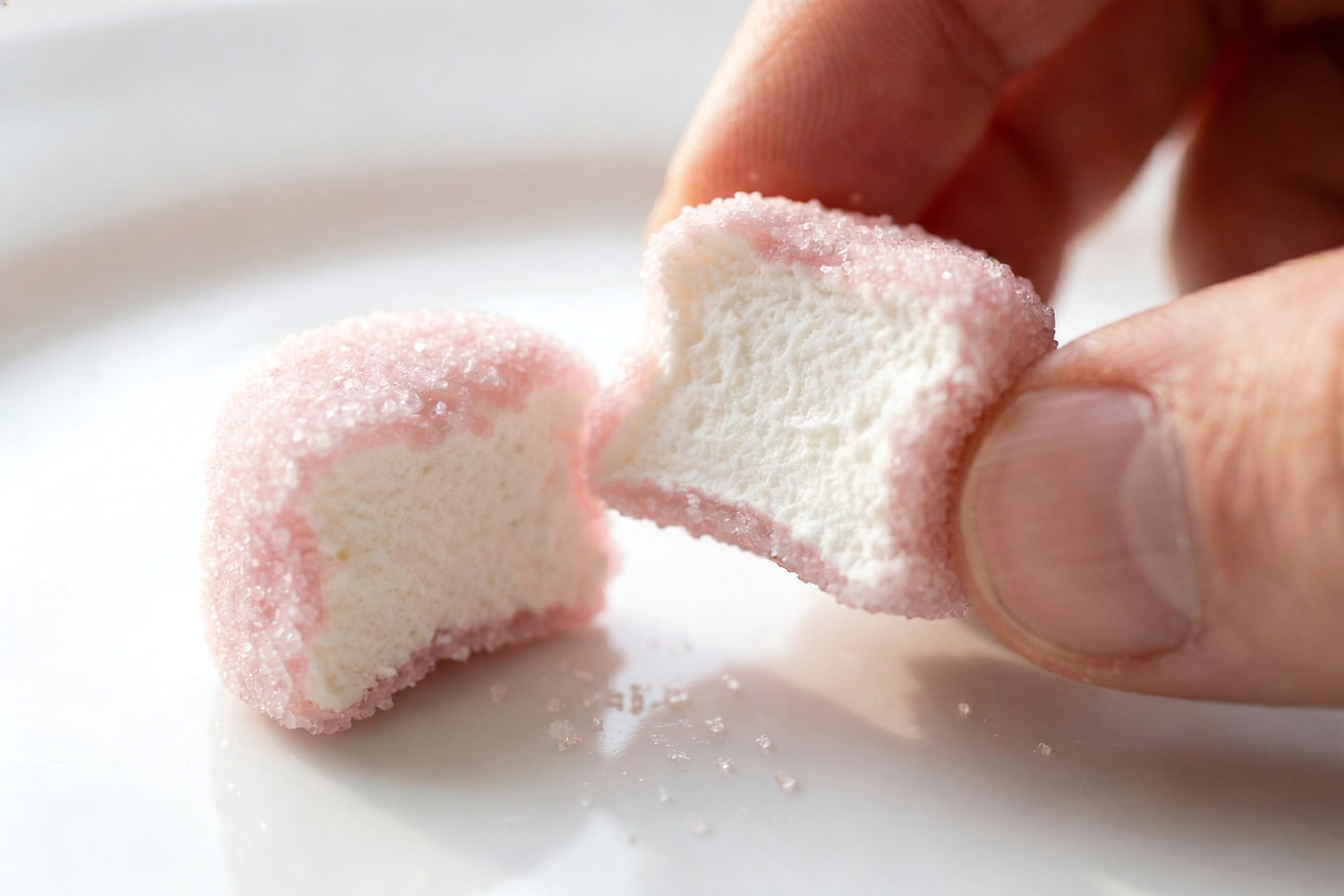
The science here is fascinating, and understanding it has helped us create better products. When you bite into a sugar-coated marshmallow, your teeth first hit the thin, rigid sugar crystal layer. It fractures with a satisfying snap. Then, immediately, you feel the soft, airy marshmallow center yield and compress. Your brain registers two completely different textures within a fraction of a second, and this contrast is what makes the experience feel special. I learned the power of this firsthand when a German candy retailer did a blind taste test at their shop. They offered customers a plain marshmallow and a sugar-coated one side by side. Over 80% preferred the coated version, and the word they used most often was "interesting." That's exactly what you want. A product that makes people pause and think, "This is different." Because "different" is what gets shared, talked about, and bought again. We've since refined our coating process11 to achieve the perfect shell thickness — thin enough to crack cleanly, thick enough to maintain that crunch even after days in the bag.
The Texture Contrast Advantage
| Feature | Plain Marshmallow | Sugar-Coated Marshmallow |
|---|---|---|
| First Bite | Soft, yielding, expected | Crispy crunch, then soft — surprising |
| Mouthfeel | One-dimensional, dissolves quickly | Multi-layered, lingers longer |
| Repeat Urge | Moderate — "it's nice" | High — "I need another one" |
| Shareability | Low — nothing to talk about | High — "you have to try this" |
How Is the Sugar Coating Actually Applied Without Ruining the Marshmallow?
You might think coating a marshmallow in sugar is simple — just roll it in crystals, right? But a clumsy process creates uneven, patchy coverage that falls off in the bag, leaving you with sugary dust and a bare marshmallow.
Professional sugar coating is a controlled, multi-stage process. The marshmallow surface is first lightly misted with a binding solution, then tumbled in a coating drum12 with precisely calibrated sugar crystals. The coated pieces then pass through a climate-controlled drying tunnel13 where the sugar fuses into a stable shell. Getting this right requires exact control of humidity, tumble speed, and crystal size — and most factories simply lack the specialized equipment.
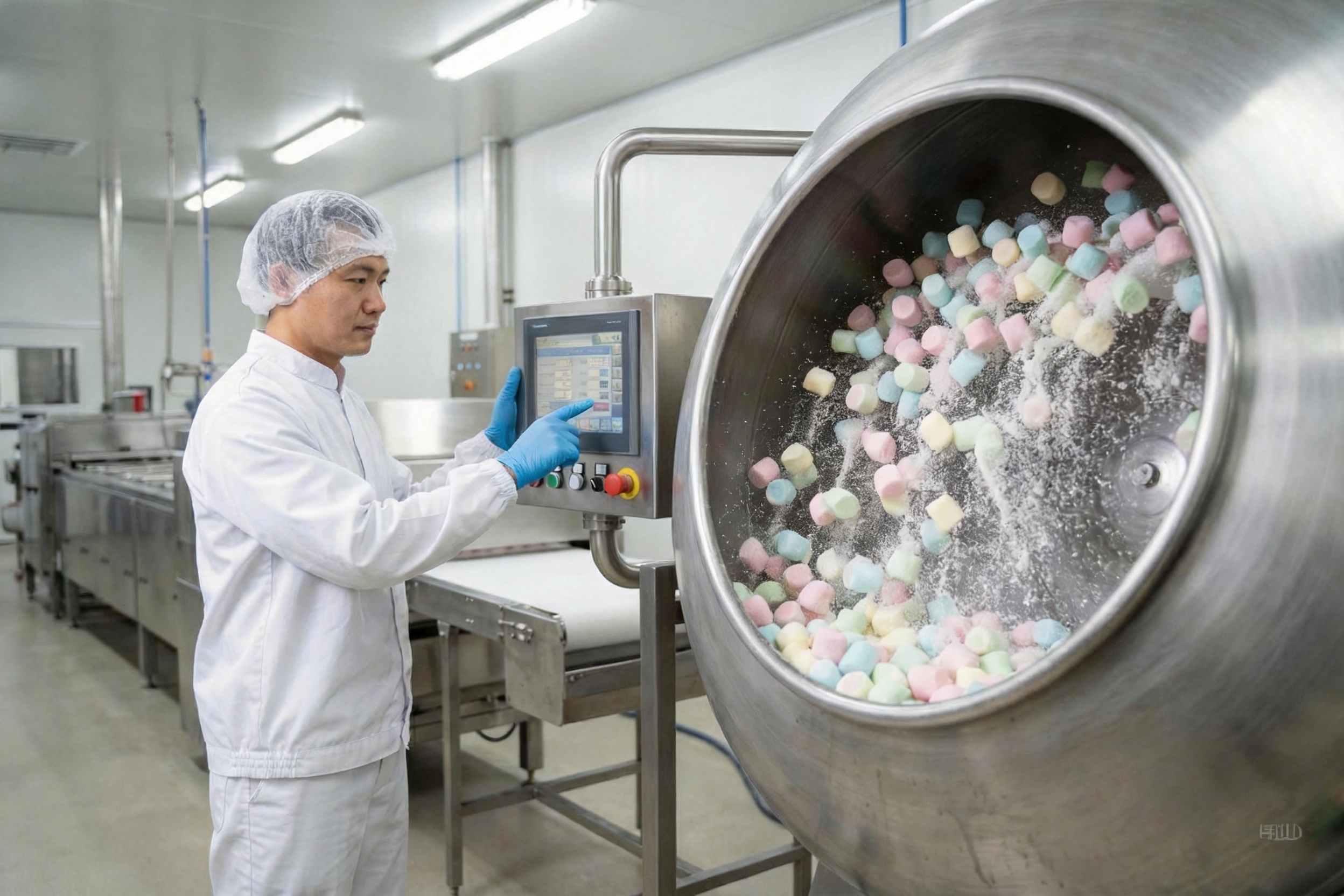
This is one of the most technically demanding processes in our factory, and it's the step that separates a premium sugar-coated marshmallow from a cheap, gritty one. I remember our first attempts years ago. We just tossed marshmallows into granulated sugar. The result was terrible — the coating was patchy, it fell off within hours, and the sugar absorbed moisture from the marshmallow and became a sticky paste. It took us months of trial and error to develop a process that actually works. The key breakthroughs were three: First, we had to get the binding solution14 right — a food-grade formula that creates a micro-thin tacky layer without penetrating the marshmallow's surface. Second, we discovered that the sugar crystal size matters enormously. Too fine, and it dissolves instantly. Too coarse, and it won't adhere evenly. We use a specific medium-grain crystal that's sized for optimal adhesion and crunch. Third, the drying phase has to be precisely controlled. Too fast, and the shell cracks and separates. Too slow, and moisture migrates from the marshmallow core into the coating, making it soft and gummy.
The Three Critical Variables
| Variable | Get It Wrong | Get It Right |
|---|---|---|
| Binding Solution | Coating slides off or soaks into the marshmallow, creating a wet mess | Micro-thin tacky layer holds crystals firmly without affecting interior softness |
| Sugar Crystal Size | Too fine = dissolves and becomes paste; too coarse = patchy, falls off | Medium-grain crystals fuse into a uniform, stable, crunchy shell |
| Drying Conditions | Too fast = shell cracks; too slow = moisture migrates, shell turns gummy | Controlled humidity and temperature create a fused, stable crust that stays crispy for months |
What Business Problems Does the Sugar Coating Solve for Wholesale Buyers?
Beyond the taste, you have practical problems: marshmallows stick together in bags, they get crushed during shipping15, and their shelf life limits your sales window. These issues cost you real money.
The sugar shell acts as a physical armor for the marshmallow. It prevents pieces from sticking together, dramatically improves crush resistance16 during transit, and creates a moisture barrier17 that extends shelf life by months. For wholesale buyers, this means fewer damaged goods, less waste from sticking, and a wider sales window — all of which directly improve your margins.
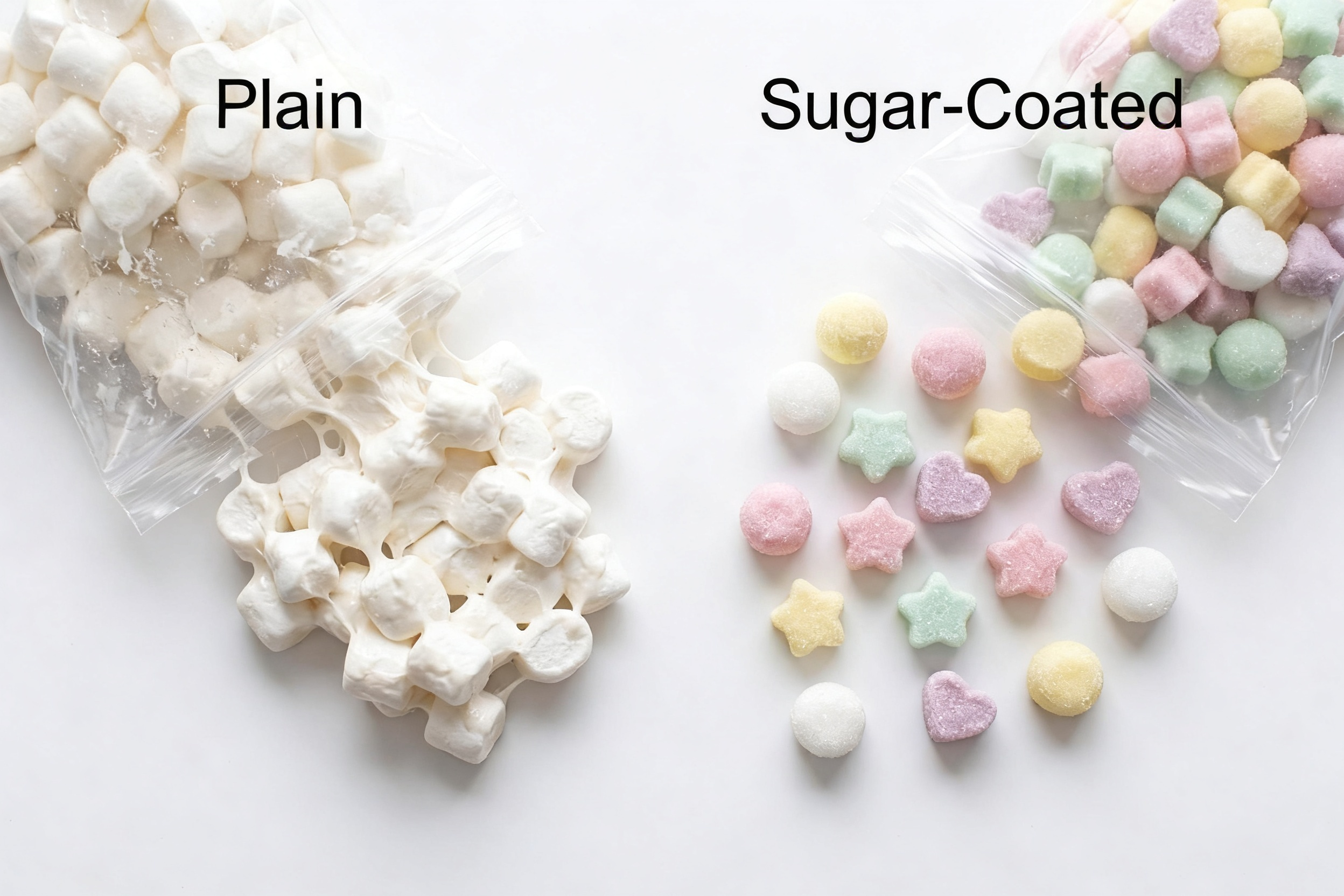
A US client once came to us frustrated. She ran a subscription box company that included marshmallows in her monthly candy boxes18. Her problem: by the time the box reached customers, the marshmallows had stuck together into a single clump. Customers would open a bag of what was supposed to be individual animal shapes and find a blob. She'd tried adding more starch powder, using different bag materials, even shipping in cooled trucks during summer. Nothing fully solved the problem. When we suggested sugar-coated marshmallows, she was skeptical. But she tested them. The results were immediate. Zero sticking complaints from the very first month. The sugar shell kept every single piece separated, even after three weeks in transit during a July heatwave. On top of that, the crunch factor made the product a customer favorite. She told me the sugar-coated marshmallows went from "a nice addition" to "the reason people subscribe." That's the power of solving a business problem and improving the product at the same time.
The Business Case: Plain vs Sugar-Coated
| Business Factor | Plain Marshmallow | Sugar-Coated Marshmallow |
|---|---|---|
| Sticking in Package | Common — pieces clump, especially in warm weather | Eliminated — sugar shell keeps every piece separated |
| Crush Resistance | Low — soft shapes deform easily under stacking pressure | High — rigid shell protects shape integrity during transit |
| Shelf Life | Moderate — surface dries out or gets sticky within weeks | Extended — sugar barrier locks in moisture, stays fresh for months |
| Customer Complaints | Frequent — clumping, stickiness, deformed shapes | Minimal — product arrives looking exactly as intended |
| Waste / Returns | Higher — damaged goods, sticky bags, off-putting appearance | Lower — durable product means fewer returns and markdowns |
How Can You Use Sugar-Coated Marshmallows Across Different Product Lines?
You see sugar-coated marshmallows as a single product. But thinking that way limits your revenue. This technique can enhance dozens of products across multiple categories.
Sugar coating works with any marshmallow shape — bears19, hearts, stars, seasonal shapes — and opens up applications that plain marshmallows can't serve. They hold up as ice cream toppings20 without dissolving, they work as cereal inclusions with a satisfying crunch, and they're perfect for trail mix21 and snack mixes because they don't stick to other ingredients. The sugar shell transforms the marshmallow from a standalone candy into a versatile food ingredient22.
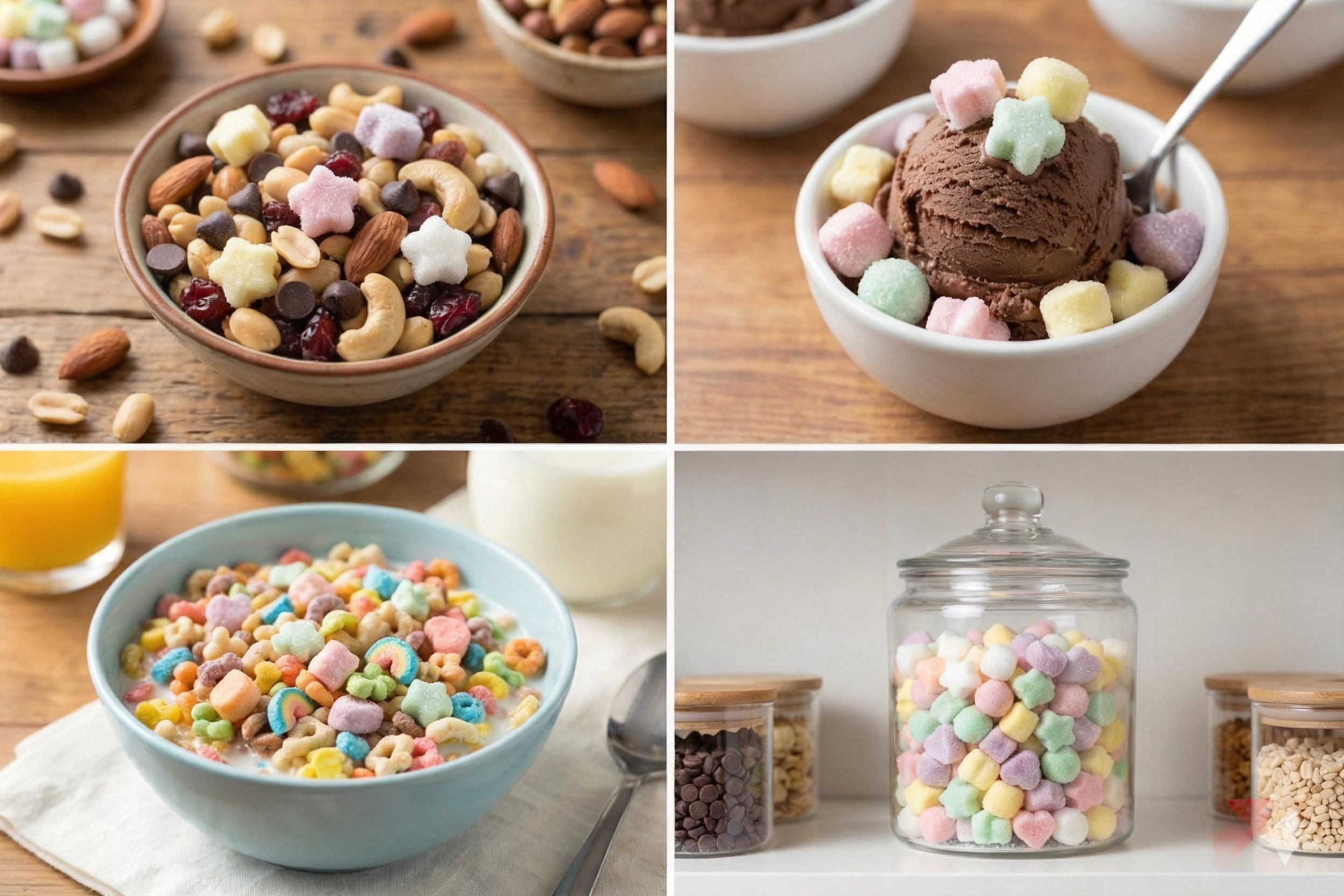
This is where the real wholesale opportunity gets exciting. One of my clients, a snack mix company23 in the US, had been avoiding marshmallows in their trail mix products for years because they always stuck to the nuts and dried fruit. It ruined the whole bag. When they tested our sugar-coated mini stars, every piece stayed perfectly separate. They launched a "S'mores Trail Mix" with chocolate chips, graham cracker pieces, and our sugar-coated mini marshmallows. It became their number-one new product that year. We've also worked with ice cream brands who use our coated marshmallows as mix-ins. The sugar shell holds up against the cold and moisture of ice cream far better than a plain marshmallow, which tends to become an icy, hard lump. The coated version stays slightly crunchy on the outside and chewy on the inside, even when frozen. This opens up an entirely new customer segment that plain marshmallows can never serve.
Application Matrix
| Application | Why Plain Marshmallows Fail | Why Sugar-Coated Marshmallows Work |
|---|---|---|
| Trail Mix / Snack Mix | Sticks to nuts, fruit, and other ingredients | Sugar shell keeps each piece separate and crunchy |
| Ice Cream Topping | Freezes hard, loses texture, becomes icy | Shell maintains crunch; interior stays chewy even when cold |
| Cereal Inclusion | Absorbs milk quickly, becomes soggy | Shell resists milk for longer, maintains texture contrast |
| Candy Jar / Buffet | Pieces clump together in humid environments | Each piece stays individual; looks beautiful for hours |
| Subscription / Gift Box | Arrives clumped and deformed after transit | Survives shipping intact; looks perfect on unboxing |
Conclusion
Sugar-coated marshmallows aren't just a flavor upgrade — the crispy shell solves real wholesale problems like sticking, crushing, and short shelf life, while opening up product applications that plain marshmallows simply can't serve.
Image Prompts
Image 1 — A pile of colorful sugar-coated marshmallows showing their crystalline sugar exterior and soft marshmallow shape
Product showcase opening — needs to display the signature crystalline texture and color variety. Photography style.
A realistic slightly elevated angle photograph, 600x400 pixels. A generous pile of sugar-coated marshmallows in various shapes — round puffs, small stars, and little hearts — casually heaped on a clean dark slate surface. The marshmallows come in soft pastel colors — pale pink, light yellow, mint green, lavender, and white — each covered with a visible layer of fine crystalline sugar that catches the light with a subtle sparkle. The sugar coating is clearly visible as a distinct textured layer, not just a dusting — the surface looks like fine frost crystals clinging to the marshmallow. A few pieces have rolled slightly apart from the pile, showing that they don't stick to each other. The lighting is bright and directional from the upper right, specifically to catch the sugar crystal sparkle and create small glinting highlights across the pile. Shot with a 50mm lens, shallow depth of field focusing on the front pieces. Premium confectionery product photography — clean, textural, and emphasizing the distinctive crystalline surface.
Image 2 — A close-up of a sugar-coated marshmallow bitten in half showing the crispy sugar shell and fluffy white interior
Texture reveal — the hero shot showing the dual-texture cross-section. Food macro photography.
A realistic extreme close-up photograph, 600x400 pixels. A single pale pink sugar-coated marshmallow that has been bitten in half, with one half held between a thumb and forefinger at the right edge of the frame, and the other half resting on a clean white surface. The bite reveals a dramatic cross-section: a thin, visible outer layer of fused sugar crystals — about 1mm thick, slightly translucent and granular — surrounding a soft, pillowy white marshmallow interior with a fine, uniform air-bubble structure. The contrast between the rigid crystalline shell and the soft yielding center is the focal point. A few tiny sugar crystal crumbs have fallen onto the surface near the bitten edge, suggesting the satisfying snap of biting through the crust. Soft, warm directional lighting from the left creating a slight sheen on the sugar crystals and a gentle shadow. Shot with a macro lens, very shallow depth of field focused precisely on the cross-section boundary where crystal meets fluff. Appetizing textural food photography — making the viewer hear the crunch.
Image 3 — A coating drum in a factory with marshmallows being tumbled in sugar crystals
Production process — showing the specialized equipment. Factory documentary photography.
A realistic medium-shot photograph, 600x400 pixels. Inside a clean marshmallow factory, a large stainless steel rotating coating drum seen from a three-quarter angle. The drum's opening faces partially toward the camera, revealing dozens of pastel-colored marshmallows tumbling gently inside among a cascade of white sugar crystals. The sugar crystals are in motion, some airborne mid-tumble, catching the overhead light. A Chinese male factory technician in a white uniform, hairnet, and blue gloves stands beside the drum, monitoring a small digital control panel mounted on the machine's frame, adjusting settings. The stainless steel drum has a polished industrial surface. In the blurred background, more factory equipment and clean white walls are visible. Bright, even overhead industrial fluorescent lighting. Shot with a 35mm lens, medium depth of field keeping the drum interior, tumbling marshmallows, and the technician in focus. Industrial food manufacturing documentary photography — conveying specialized equipment, technical precision, and professional operation.
Image 4 — A comparison of an opened bag of plain marshmallows clumped together versus a bag of sugar-coated marshmallows perfectly separated
Business problem/solution — side-by-side showing the sticking problem solved. Comparison product photography.
A realistic top-down photograph, 600x400 pixels. A clean white surface with two opened bags of marshmallows placed side by side for direct comparison. On the left, a clear bag of plain white marshmallows has been opened and partially poured out — the marshmallows have clumped together into a sticky mass, with several pieces fused and deformed, some stretched and torn where they were pulled apart. The bag interior shows sticky residue. A small label reads "Plain." On the right, a clear bag of sugar-coated marshmallows in the same shapes has been opened and poured out — every single piece is perfectly separated, individually intact, with clean crystalline surfaces and no sticking whatsoever. The pieces sit loosely as if just scattered, each maintaining its original shape. A small label reads "Sugar-Coated." The visual contrast is stark and immediately obvious — mess vs perfection. Even, bright overhead studio lighting with soft shadows. Shot with a 35mm lens, medium depth of field keeping both sides equally sharp. Editorial product comparison photography — letting the visual difference make the argument without words.
Image 5 — Sugar-coated marshmallows being used in four different applications — trail mix, ice cream topping, cereal, and candy jar
Multi-application showcase — demonstrating versatility across product categories. Lifestyle grid photography.
A realistic photograph composed as a 2x2 grid layout, 600x400 pixels. Four distinct application scenes, each occupying one quadrant of the frame, separated by thin white borders. Top-left: a small bowl of trail mix with visible sugar-coated mini marshmallow stars mixed among nuts, chocolate chips, and dried cranberries — the marshmallows are clearly separate, not stuck to anything. Top-right: a scoop of chocolate ice cream in a bowl with sugar-coated marshmallow pieces scattered on top, the sugar crystals still visible and intact despite the cold. Bottom-left: a bowl of colorful breakfast cereal with small sugar-coated marshmallow pieces among the cereal shapes, similar to Lucky Charms but with a visible crystalline coating. Bottom-right: a clear glass candy jar filled with assorted pastel sugar-coated marshmallows in various shapes, each piece perfectly individual and sparkling. All four scenes use warm, inviting food photography lighting. Each quadrant looks like a real product application, not a staged setup. Shot with a 35mm lens, consistent depth of field across all four scenes. Versatile food application grid photography — demonstrating that one product serves multiple markets.
Explore creative candy buffet and display ideas for retail merchandising inspiration. ↩
Learn about the sugar coating process and how it transforms confectionery texture and durability. ↩
Explore the food science behind how marshmallow ingredients work together to create texture. ↩
Discover what gives marshmallows their distinctive flavor and texture from a culinary science perspective. ↩
Understand the scientific factors that determine marshmallow shelf life and freshness. ↩
Learn about the key elements of starting and running a marshmallow manufacturing business. ↩
Understand the psychological factors that influence consumer purchasing behavior and product choices. ↩
Explore the psychology of sensory contrast and how multi-texture food experiences drive preference. ↩
Learn about the dual-texture design principle behind one of the world's most successful confectionery products. ↩
Gain insights on building a strong brand identity that drives customer loyalty and repeat purchases. ↩
Watch how marshmallows are manufactured and processed at commercial scale. ↩
Learn about the complete marshmallow manufacturing process including coating and finishing techniques. ↩
Understand the science behind cooling and drying tunnels in food manufacturing. ↩
Explore research on food packaging and shelf life preservation techniques. ↩
Understand common logistics challenges importers face and how product design can mitigate them. ↩
Discover how strategic packaging and product design can reduce shipping damage and improve logistics. ↩
Learn how moisture barrier materials preserve product freshness and quality during storage and transit. ↩
Understand how a memorable unboxing experience drives customer loyalty in subscription businesses. ↩
Discover the world of custom shaped marshmallows and their unique production process. ↩
Learn how marshmallows maintain soft texture in frozen desserts like rocky road ice cream. ↩
Find creative marshmallow recipe and product development ideas for new applications. ↩
Discover how confectionery innovation creates new market opportunities for manufacturers. ↩
Explore how consumers define premium in contemporary food culture and snacking trends. ↩