Worried about the complex logistics of importing marshmallows1? Hidden costs and damaged goods can ruin your profits, but the secret isn't just the shipper; it's the factory's preparation.
The key is partnering with an experienced factory. They optimize container space to cut freight costs%%%FOOTNOTE_REF2%%% and use [specialized packaging](https://www.embalex.com/en/special-packaging-what-types-are-there-and-what-are-they-used-for/news/33)3 to prevent heat and moisture damage. A good factory handles 80% of logistics challenges4 before your marshmallows even ship, ensuring they arrive perfectly.
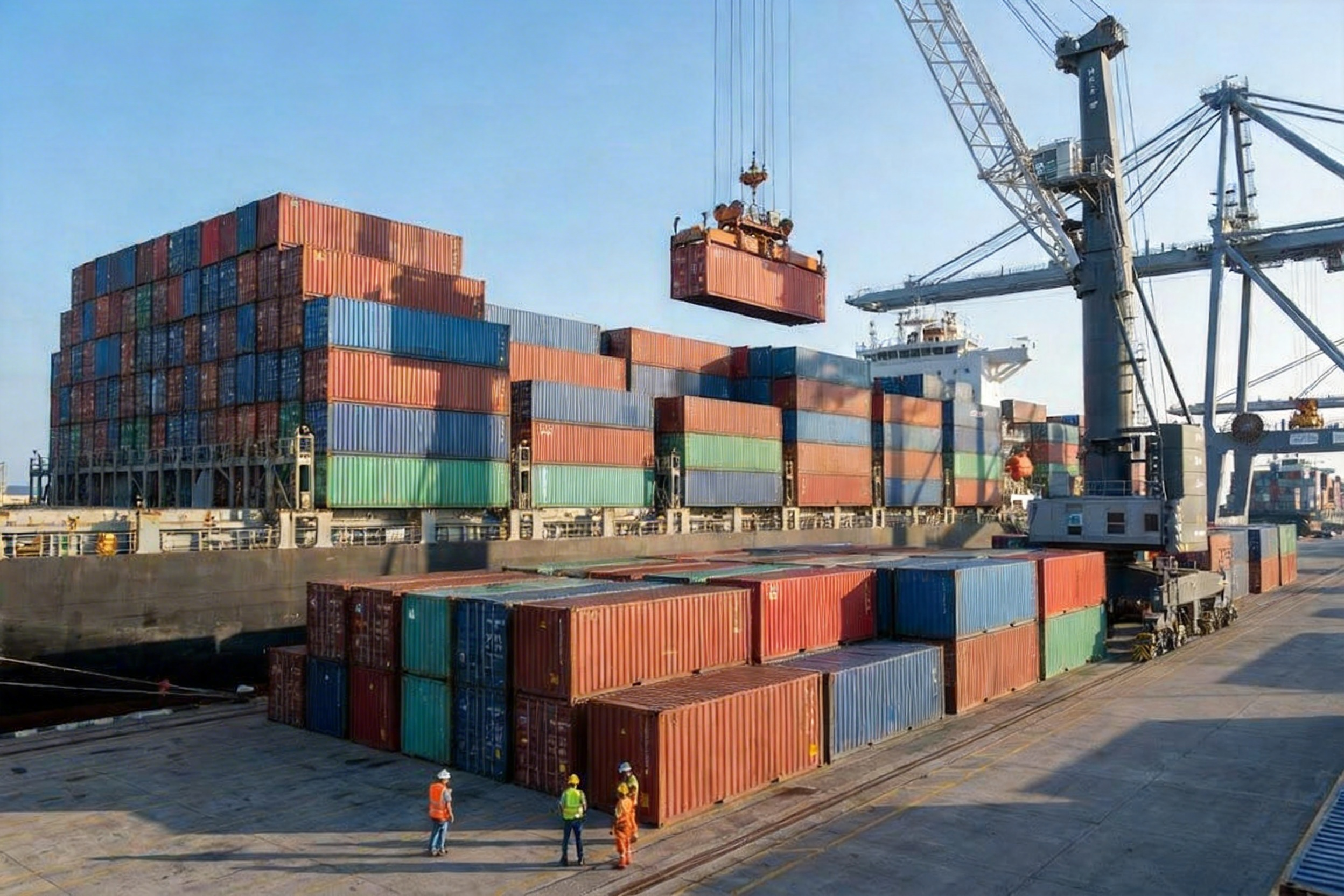
You might think logistics is all about finding the right freight forwarder and negotiating rates. Many importers focus all their energy there. But what if I told you the most critical steps, the ones that truly determine your final cost and product quality, happen long before your container is even loaded? Let's break down what really matters when importing a product as unique as marshmallows.
Why Does Container Loading Matter So Much for Marshmallows?
Shipping costs seem unpredictable and high? Paying for empty space in your container feels like burning money. The right factory uses strategic loading plans to maximize every inch and cut your freight bills.
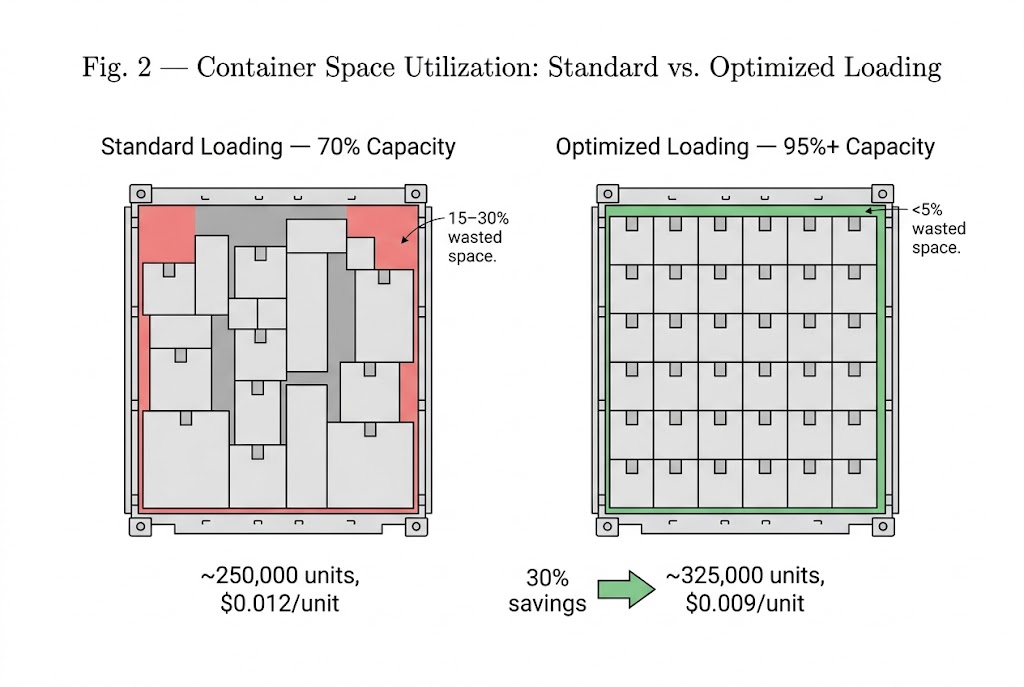
Marshmallows are light but bulky, so sea freight is billed by volume (CBM), not weight. An experienced factory uses custom carton sizing5 and smart stacking patterns to fit more products into a container. This simple step can reduce your shipping costs by up to 30% per unit.
When you ship heavy products like steel parts, you pay for the weight. But with marshmallows, you're shipping mostly air. Freight companies charge you based on the space your cargo takes up, measured in Cubic Meters (CBM)6. This is where an inexperienced factory can cost you a fortune. They might use whatever standard boxes they have on hand, leaving significant gaps inside the container. That's wasted space you are paying for.
I've seen clients come to us after their previous supplier did just that. They were shipping a 40-foot container that was only 70% full in terms of potential capacity. We worked with them to redesign their master cartons. By adjusting the box dimensions by just a few centimeters, we created a perfect modular fit. The result? We fit almost 30% more product into the same container. This single change saved them thousands of dollars on freight for just one shipment.
Standard vs. Optimized Loading Plan
| Metric | Standard Loading (Inexperienced Factory) | Optimized Loading (Experienced Factory) |
|---|---|---|
| Carton Design | Standard, off-the-shelf sizes | Custom-designed for product and container |
| Wasted Space | High (15-30%) | Minimal (<5%) |
| Units per Container | ~250,000 units | ~325,000 units |
| Shipping Cost/Unit | $0.012 | $0.009 |
| Your Savings | - | ~25-30% |
An expert factory doesn't just make marshmallows; we are experts in shipping them efficiently. We treat container loading7 like a puzzle, and solving it means more money in your pocket.
How Can a Factory Prevent Your Marshmallows from Arriving as a Sticky Mess?
Are you afraid your marshmallows will melt or stick together during a long sea journey? This common fear can become a costly reality. Proper packaging from your factory is the only real protection.
The secret is multi-layered, moisture-proof packaging8. A reliable factory assesses the destination's climate and transit time. They use food-grade inner bags9 with strong seals and sometimes add desiccants to absorb any moisture, ensuring your marshmallows arrive fresh and separate, not as one giant clump.
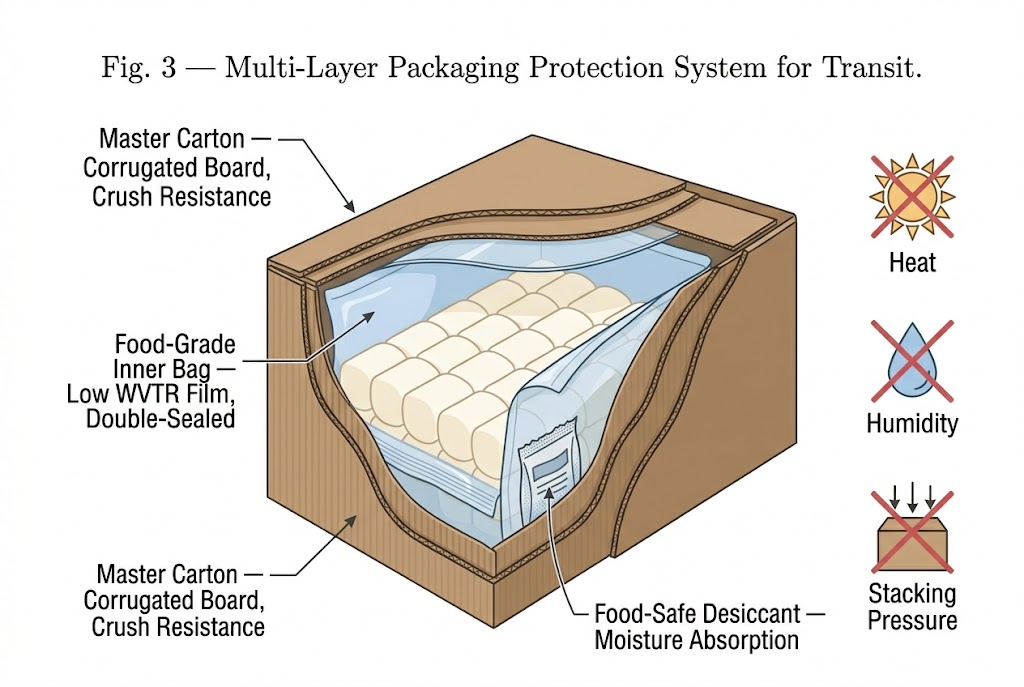
Your marshmallows have two main enemies during transit: heat and humidity. A shipping container10 sitting on a sunny dock in Shanghai can get incredibly hot inside. Then, as it travels across the ocean, humidity can seep in, turning your perfectly fluffy products into a sticky, unsellable disaster. Your freight forwarder can't do anything about this; the protection has to be built in at the factory.
We had a client who wanted to ship to Florida during the summer. They were worried because a previous shipment from another supplier had arrived completely ruined. We developed a specific packaging protocol11 for them. It involved a thicker, food-grade inner bag with a double-seal closure. Then, we placed food-safe desiccant packs inside each master carton to absorb any ambient moisture. It’s an extra step, but it provides total peace of mind. Their shipment arrived in perfect condition, and we've used this method for all their subsequent orders. It’s about anticipating problems, not just reacting to them.
Key Packaging Layers for Protection
- The Inner Pouch: This is the first line of defense. The plastic film must have a low Water Vapor Transmission Rate (WVTR) and be sealed securely to lock out moisture.
- The Master Carton: The outer box needs to be strong enough to withstand stacking and handling without crushing the delicate product inside.
- Optional Climate Control: For shipments to extremely hot or humid climates, we add food-grade desiccant packs as an extra layer of insurance against moisture damage.
What Paperwork Should Your Factory Prepare Before Shipping?
Customs delays are a nightmare for any importer. Is your shipment stuck at the port because of missing paperwork? An experienced factory prepares all necessary documents in advance, so your goods clear customs without a hitch.
Your factory should proactively provide a full set of documents. This includes the Commercial Invoice12, Packing List, and Bill of Lading13. Critically, they must also have valid food-safety certifications14 like BRC, FDA registration, and ISO 22000, with test reports ready for inspection.
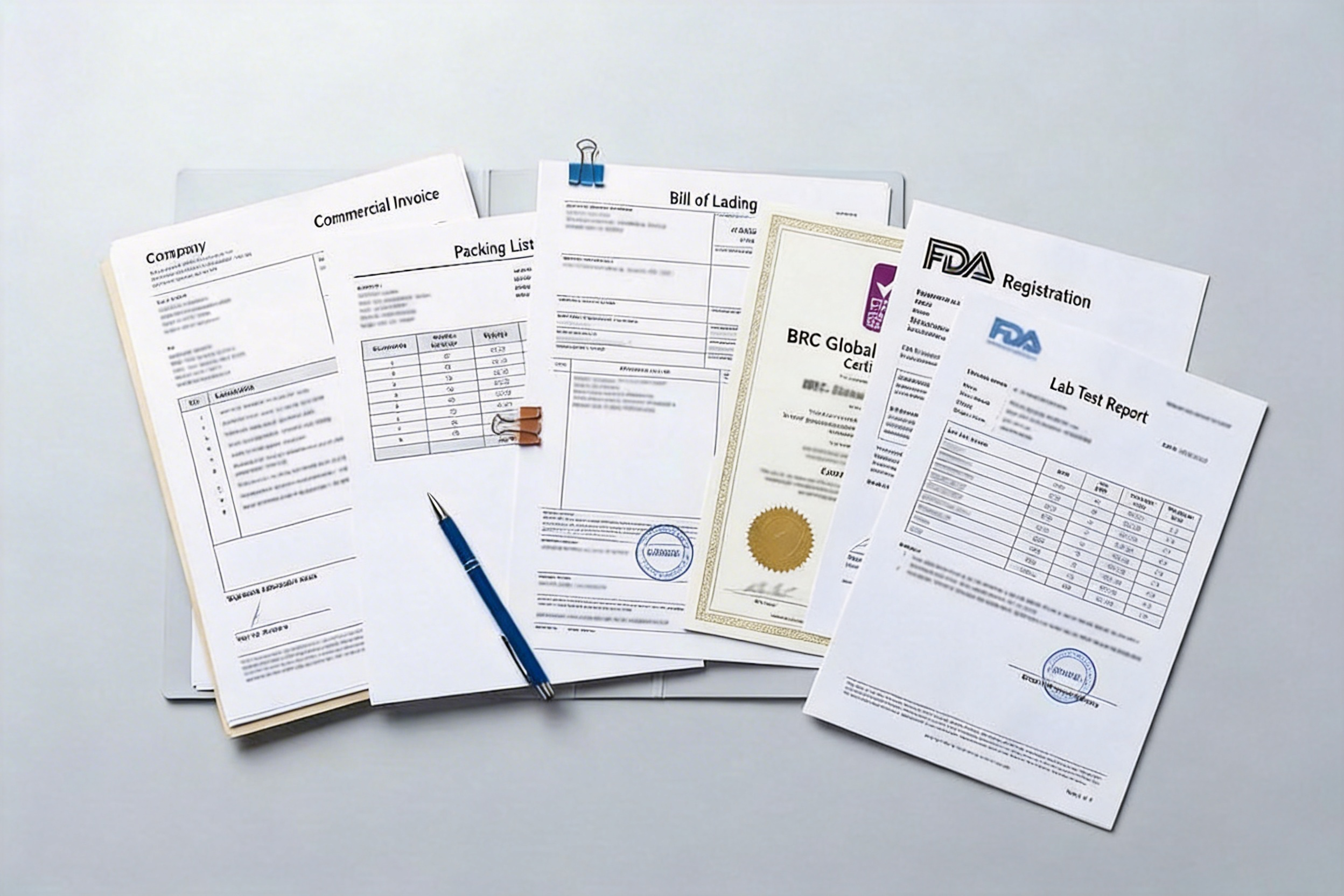
Getting your marshmallows out of our factory is one thing; getting them into your country is another. Customs officials in the US and Europe are extremely strict when it comes to food imports. If your paperwork isn't perfect, your shipment can be held for weeks, racking up storage fees and potentially ruining the product. This is another area where 80% of the work is done before the ship even sails.
A professional factory doesn't wait for you to ask for these documents. We have them ready as part of our standard export procedure. Our factory holds certifications like BRC, which is a key requirement for most major European retailers, and we are registered with the FDA for the US market. This means we've already passed the rigorous audits that prove our production process is safe and compliant. When customs asks for proof, we have the certificates and lab reports ready to go. This preparation turns a potentially stressful customs process into a smooth, routine clearance.
Essential Document Checklist
| Document Type | Purpose & Why It's Critical |
|---|---|
| Commercial Invoice12 | Declares the value of the goods for calculating duties and taxes. Must be accurate. |
| Packing List | Details the contents, weight, and dimensions of each carton. Used by customs to verify the shipment. |
| Bill of Lading13 (B/L) | The contract between you and the carrier. It's also the title to your goods. |
| Food Safety Certs | Proof of compliance (BRC, ISO 22000, etc.). Shows customs the product was made in a safe facility. |
| Ingredient Reports | A detailed list of all ingredients and nutritional information. Required for food labeling and safety checks. |
Conclusion
Importing marshmallows successfully isn't about finding the best shipper. It's about choosing a factory partner who masters pre-shipment preparation, saving you money and ensuring product quality on arrival.
Explore expert insights on importing marshmallows to ensure quality and cost-effectiveness. ↩
Learn strategies to minimize freight costs and maximize your profit margins. ↩
Discover how specialized packaging can protect your products during transit. ↩
Understand the logistics challenges faced by importers and how to overcome them. ↩
Learn about the benefits of custom carton sizing for shipping efficiency. ↩
Get clarity on CBM and its impact on shipping costs. ↩
Find out how effective container loading can save you money and space. ↩
Explore the importance of moisture-proof packaging in preserving product quality. ↩
Understand the role of food-grade inner bags in food safety during shipping. ↩
Explore best practices for optimizing shipping container usage. ↩
Understand how a packaging protocol can enhance product protection during transit. ↩
Learn about the significance of a Commercial Invoice in international shipping. ↩
Understand the critical role of a Bill of Lading in the shipping process. ↩
Discover essential food-safety certifications that ensure compliance and safety. ↩