Struggling to understand why some marshmallows are fluffy perfection while others are tough? The secret isn't the recipe, but the hidden factory details that make or break the texture.
The factory process for making marshmallows involves dissolving ingredients like gelatin1 and sugar, whipping the mixture to create a foam, shaping it, and carefully drying it. The final quality hinges on expert control over temperature, aeration2, and drying, where small mistakes can ruin the entire batch.
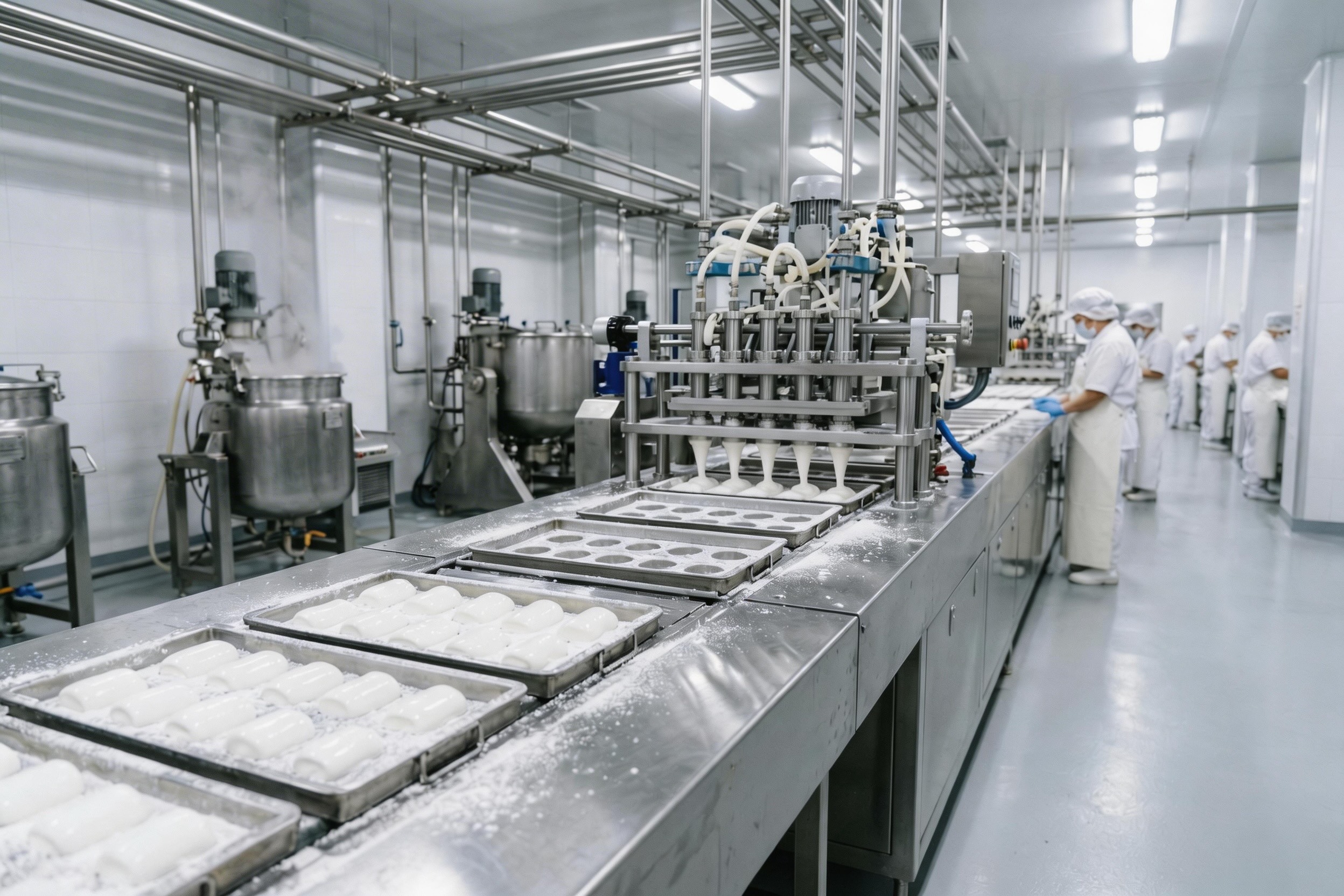
It sounds simple enough on paper. But I've spent years on the factory floor, and I can tell you that the difference between a premium marshmallow and a mediocre one is all about experience. The process is less like following a recipe and more like conducting an orchestra. Let's look at why each step is a craft mastered only through years of practice, and why the "simple" parts are actually the hardest to get right.
Why Is Ingredient Preparation So Critical?
You followed the recipe perfectly, but your marshmallow texture3 is still wrong. A tiny mistake in temperature can make a batch hard and dense instead of soft and bouncy.
Ingredient preparation is vital because it builds the foundation for the marshmallow's final texture. Precisely controlling the gelatin1's dissolving temperature and the sugar syrup4's cooking point determines the final chewiness and stability. A few degrees of difference can ruin everything.
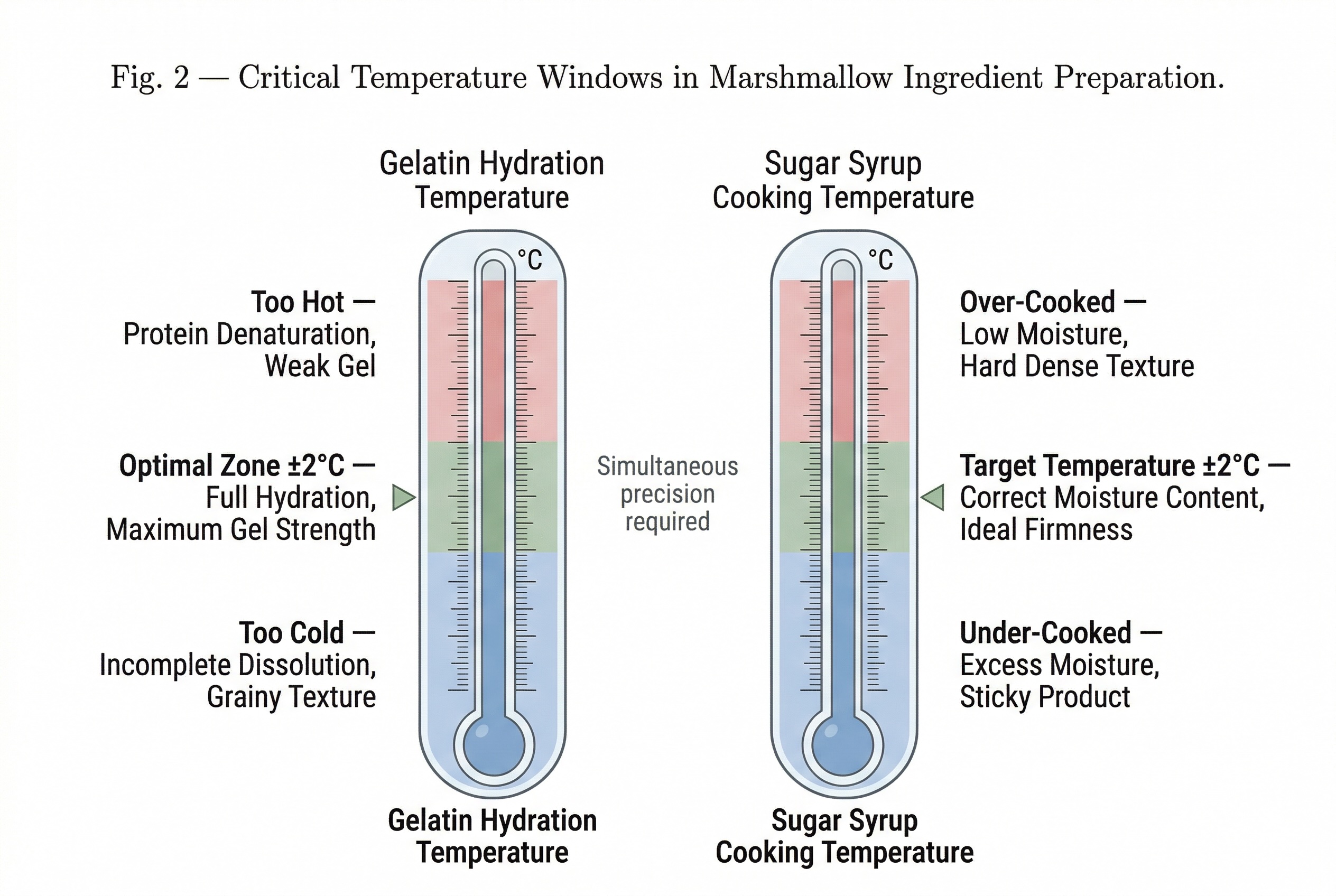
In our factory, we know that the real work happens before any whipping even begins. It's all about precision. A new operator might just follow the numbers on a sheet, but a seasoned technician understands the science behind those numbers.
The Gelatin Goldilocks Zone
Gelatin is what gives a marshmallow its signature bounce, but it's incredibly sensitive. If you dissolve it in water that’s too hot, its gelling strength weakens, resulting in a rubbery texture. If the water is too cold, it won’t dissolve completely, leaving grainy clumps. We've learned that a deviation of just two degrees Celsius can be the difference between a perfectly elastic marshmallow and one that’s unpleasantly tough. An experienced team knows how to manage this, adjusting for factors like the specific gelatin1 batch or even the factory's ambient temperature.
Sugar Syrup Science
Simultaneously, we cook a precise mixture of sugar, corn syrup5, and water. This isn't just about melting sugar; it's about cooking it to an exact temperature to control the final moisture content6. Rushing this step or letting it get too hot changes the entire structure.
| Parameter | Correct Temp | Too Hot (+2°C) | Too Cold (-2°C) |
|---|---|---|---|
| Gelatin Dissolving | Perfect Bounce | Weak, Rubbery | Grainy, Clumpy |
| Sugar Syrup Cooking | Soft & Fluffy | Hard & Chewy | Sticky & Wet |
This is where factory experience becomes irreplaceable. It's not just about having new machines; it's about having a team that can fine-tune these critical variables on the fly.
How Does Aeration Change the Marshmallow?
Some marshmallows look huge but feel hollow and unsatisfying. You are essentially paying for air instead of a delicious, soft treat, because the volume is deceiving.
Aeration, or whipping air into the marshmallow slurry, creates its light, fluffy texture. The amount of air is critical. Too much makes a product that is fragile and hollow, while too little makes it dense and heavy. The goal is the perfect balance.
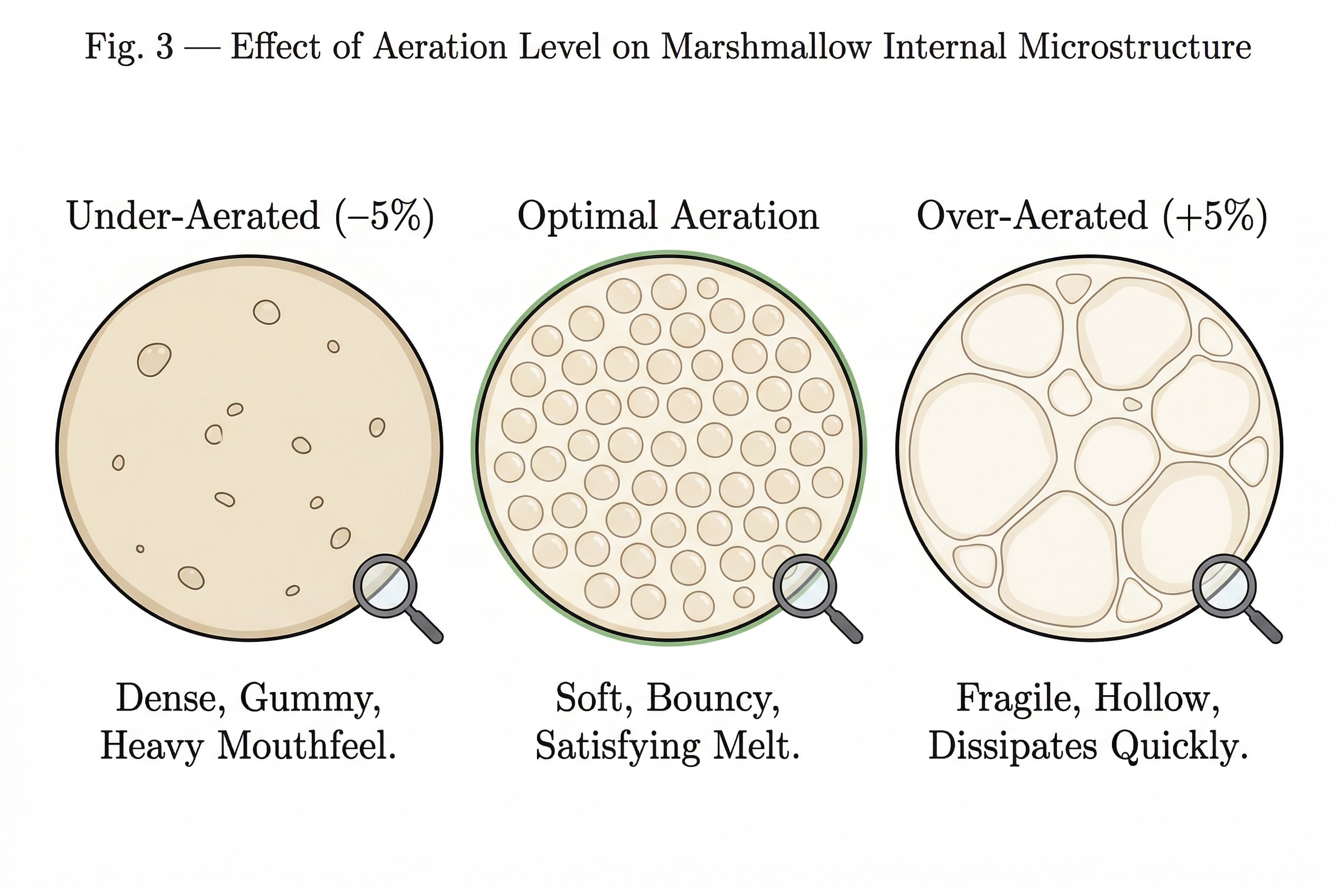
Anyone can turn on a mixer, but knowing exactly when to stop is an art. In our facility, we see aeration2 as the step that defines the customer's experience. It’s where the marshmallow gets its personality.
The Volume vs. Density Trade-off
It’s a common trick in the industry to whip more air into the mixture. A 5% increase in aeration2 can make the marshmallows look much bigger in the bag, which lowers costs because you’re selling more air. However, this high aeration2 creates a hollow, unsatisfying bite that dissolves into nothing. It feels cheap because it is. We focus on achieving the optimal density, which gives a soft yet substantial mouthfeel that slowly melts, delivering a much better eating experience.
The Art of the Stable Foam
Getting air into the slurry is one thing; creating a stable foam7 is another. The goal is to form millions of tiny, uniform air bubbles that will hold their shape. This depends on whipping speed8, duration, and the quality of the gelatin1 base. An inexperienced operator follows a timer. Our master technicians, however, watch the slurry's sheen and flow. They know from sight and texture the exact moment the foam structure is perfect and stable.
| Aeration Level | Appearance | Texture | Mouthfeel |
|---|---|---|---|
| Low (-5%) | Smaller, Dense | Heavy, Gummy | Too Chewy |
| Optimal | Full-bodied | Soft, Bouncy | Satisfying, Melts well |
| High (+5%) | Puffy, Large | Fragile, Crumbly | Hollow, Dissipates quickly |
This precise control is a key difference between a premium marshmallow and a budget one. We always prioritize the perfect bite over deceptive volume.
Isn't Drying Just about Removing Water?
You bought a bag of marshmallows, and they turned into a sticky mess after a few weeks. Improper drying doesn't just ruin the texture; it also shortens the shelf life.
Drying is a controlled process that forms a thin "skin" on the marshmallow to lock in moisture and prevent stickiness. The correct drying time and conditions are essential for a stable texture and a long, reliable shelf life.
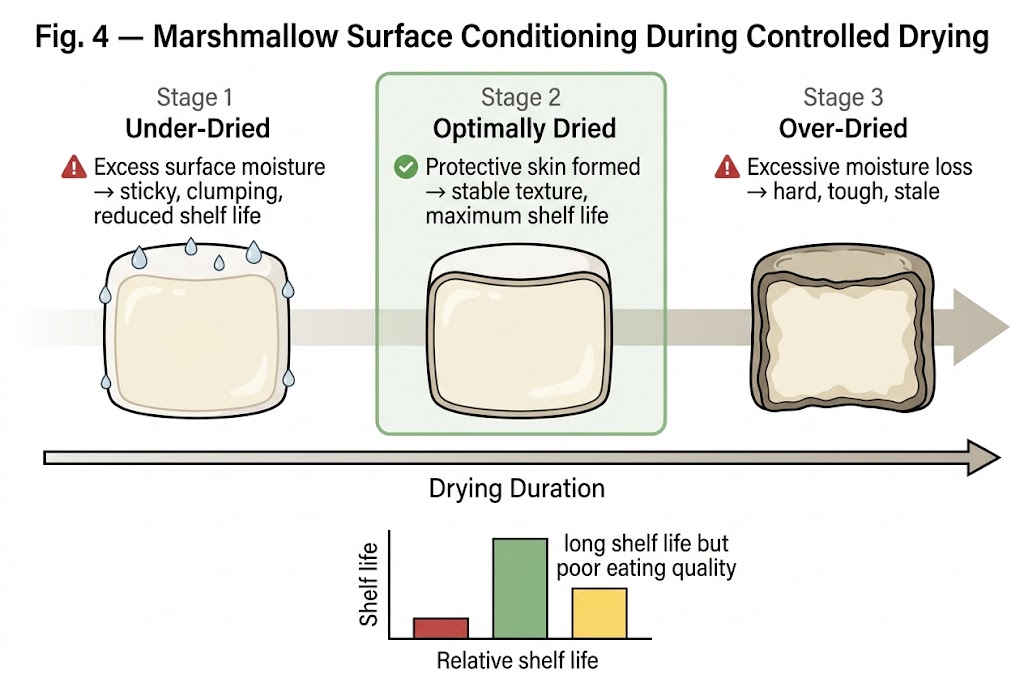
Many people think drying is a passive, "set it and forget it" stage. In reality, this is where a factory's long-term quality is proven. Rushing this step to increase output is a common mistake that has huge consequences for the final product on the shelf.
The Shelf-Life Connection
The drying process9 is directly linked to shelf life. If marshmallows are packaged before they are properly conditioned, the excess moisture trapped inside will slowly migrate to the surface. This makes them sticky, causing them to clump together in the bag and drastically reducing their shelf life10. We've seen how a difference of just a few hours in the drying room can cut a product's shelf life by two months. Our drying rooms have strict controls for temperature, humidity, and airflow to ensure every single marshmallow is perfectly stable.
Skin Formation, Not Dehydration
The goal isn't to dry the marshmallow out, which would make it hard. The goal is to form a microscopic, non-sticky skin on the surface. This happens as the marshmallows rest in a bed of food-grade starch11, which gently draws out just enough moisture from the exterior. This skin protects the soft, moist interior.
| Drying Time | Resulting Texture | Shelf Life Impact | Common Problem |
|---|---|---|---|
| Too Short | Wet surface, soft core | Drastically reduced | Becomes sticky, clumps in bag |
| Optimal | Dry skin, soft interior | Stable for months | - |
| Too Long | Hard, crusty surface | Long, but poor quality | Becomes tough and stale |
This is another area where experience trumps equipment. A skilled team knows how to adjust drying parameters based on the marshmallow's size, shape, and even the day's weather.
Conclusion
Marshmallow production looks simple, but quality lies in details that only experience can master. It's the precise control at every step that makes a truly great marshmallow.
Learn how gelatin affects the texture and quality of marshmallows for better baking results. ↩
Find out how aeration contributes to the fluffiness and overall quality of marshmallows. ↩
Understanding the factors that influence marshmallow texture can help you achieve the perfect treat. ↩
Discover the science behind sugar syrup and its impact on the final marshmallow product. ↩
Find out how corn syrup contributes to the texture and flavor of marshmallows. ↩
Understanding moisture content is key to achieving the perfect marshmallow consistency. ↩
Learn about the importance of stable foam for achieving the ideal marshmallow texture. ↩
Understanding whipping speed can help you master the art of making marshmallows. ↩
Learn about the critical drying process that ensures marshmallows maintain their quality and shelf life. ↩
Explore the connection between drying and shelf life to keep your marshmallows fresh longer. ↩
Learn how food-grade starch plays a vital role in the drying process of marshmallows. ↩