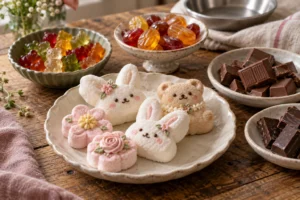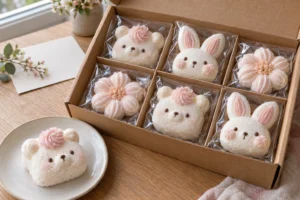
You have a brilliant idea for a custom marshmallow1. But turning that idea into a real product feels complicated and expensive. Where do you even begin this difficult process?
The best way to design your own custom marshmallow1 is to work directly with your manufacturer's engineers from the very beginning. They can provide critical feedback on your design to ensure it is actually manufacturable before you spend money on finalized artwork or molds.
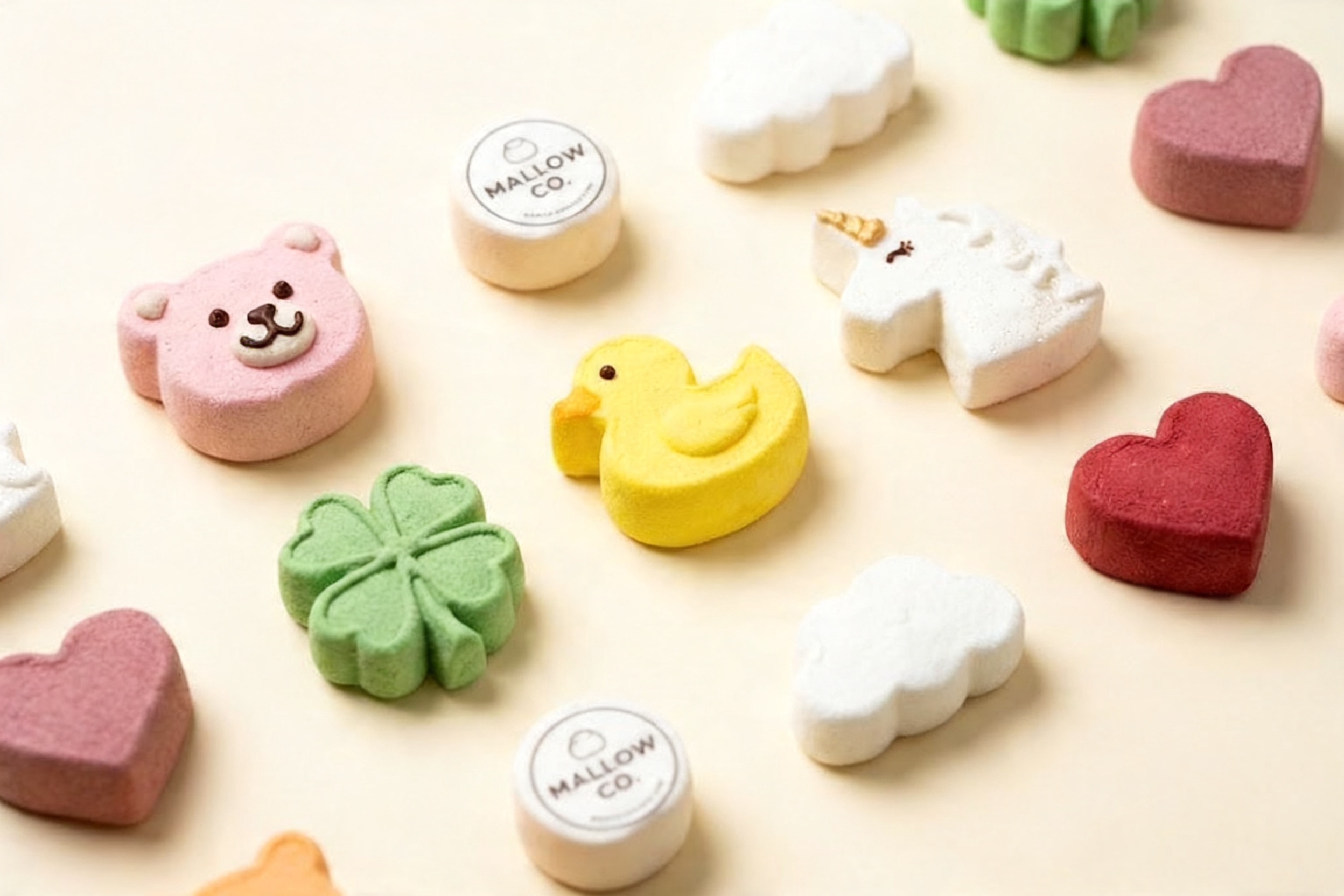
I see it all the time. A brand comes to us, excited. They show us a beautiful design for a custom marshmallow1, a perfect representation of their logo or mascot. They've already paid a designer and are ready to place a big order. Then, I have to deliver the bad news: "We can't make this." Or worse, "We can make it, but the cost will be double because half of them will break." This is a terrible conversation to have. It's frustrating for the brand and for us. But it doesn't have to be this way. There is a path to get your idea from a drawing to a finished product without all the drama. You just need to know the real first step.
Why Doesn't My Perfect Design Work for Marshmallow Production?
You spent time and money on a flawless design. Now, a factory is telling you it's impossible to make. It is incredibly frustrating and feels like a major setback.
Your perfect design likely fails because it was created without considering the physical limits of marshmallow production. Thin lines snap, intricate holes collapse, and sharp angles tear when the marshmallow is removed from its mold. These are realities of the manufacturing process2.
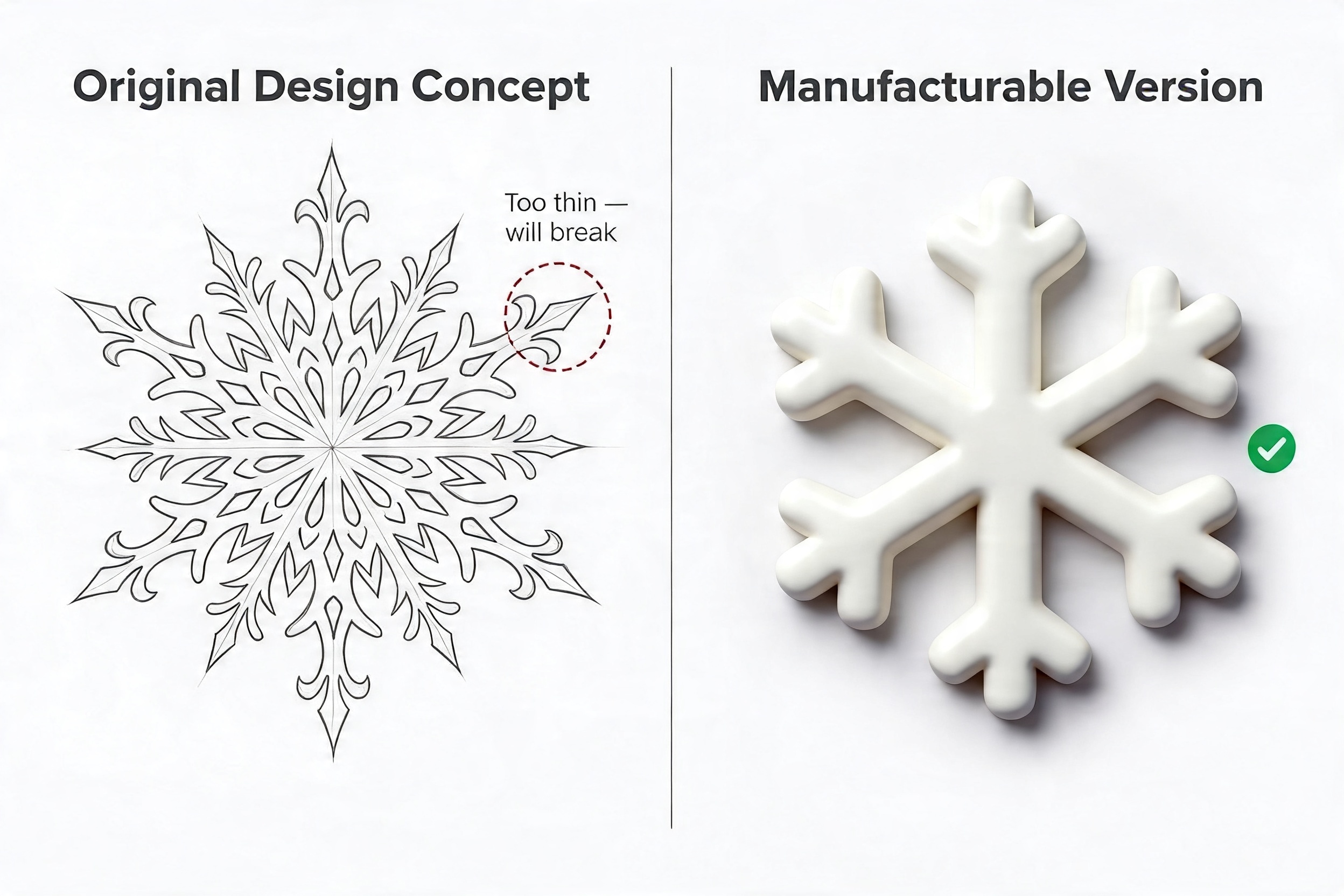
Let me tell you a story about a client. They were a gift company preparing for the holidays and had a stunning design for a snowflake marshmallow. It was intricate, delicate, and beautiful on paper. The problem was, marshmallow is not paper. It's a sticky, aerated mixture that gets piped into a mold and has to be released cleanly. When we tried to make a sample, the reality of physics hit hard. The thin, pointy arms of the snowflake broke off every single time we tried to demold them. The tiny cutouts in the center just became a messy blob because the aerated marshmallow3 batter couldn't hold that fine a shape. They had a design that was 100% perfect for a Christmas card, but about 10% manufacturable as a marshmallow. We had to go back to the drawing board and work with them to create a new design that kept the idea of a snowflake but was much bolder and simpler.
The Gap Between Design and Production
Most designers don't know how marshmallows are made. Why would they? They are experts in visual appeal, not food science and mold engineering4. This creates a huge gap.
| Design Feature | The Designer's Goal | The Production Reality |
|---|---|---|
| Thin Lines | To show fine detail and elegance. | Lines thinner than 3mm are extremely fragile and will likely break during removal from the mold. |
| Sharp Angles | To create a crisp, defined logo or shape. | Marshmallow batter doesn't flow perfectly into sharp corners, leading to incomplete shapes or weak points that tear. |
| Hollow Spaces | To add complexity and detail (e.g., the hole in a donut shape). | Small holes can collapse as the marshmallow mixture sets and expands. The structure isn't strong enough. |
What's the Secret to a Successful Custom Marshmallow Design?
You want to avoid the headache of a failed design5. You need a process that works and doesn't waste your budget on ideas that can't be produced efficiently.
The secret is simple: partnership. A successful custom marshmallow1 is not just designed; it is co-created by you and your manufacturing partner. This collaboration must start at the idea stage, not the production stage.
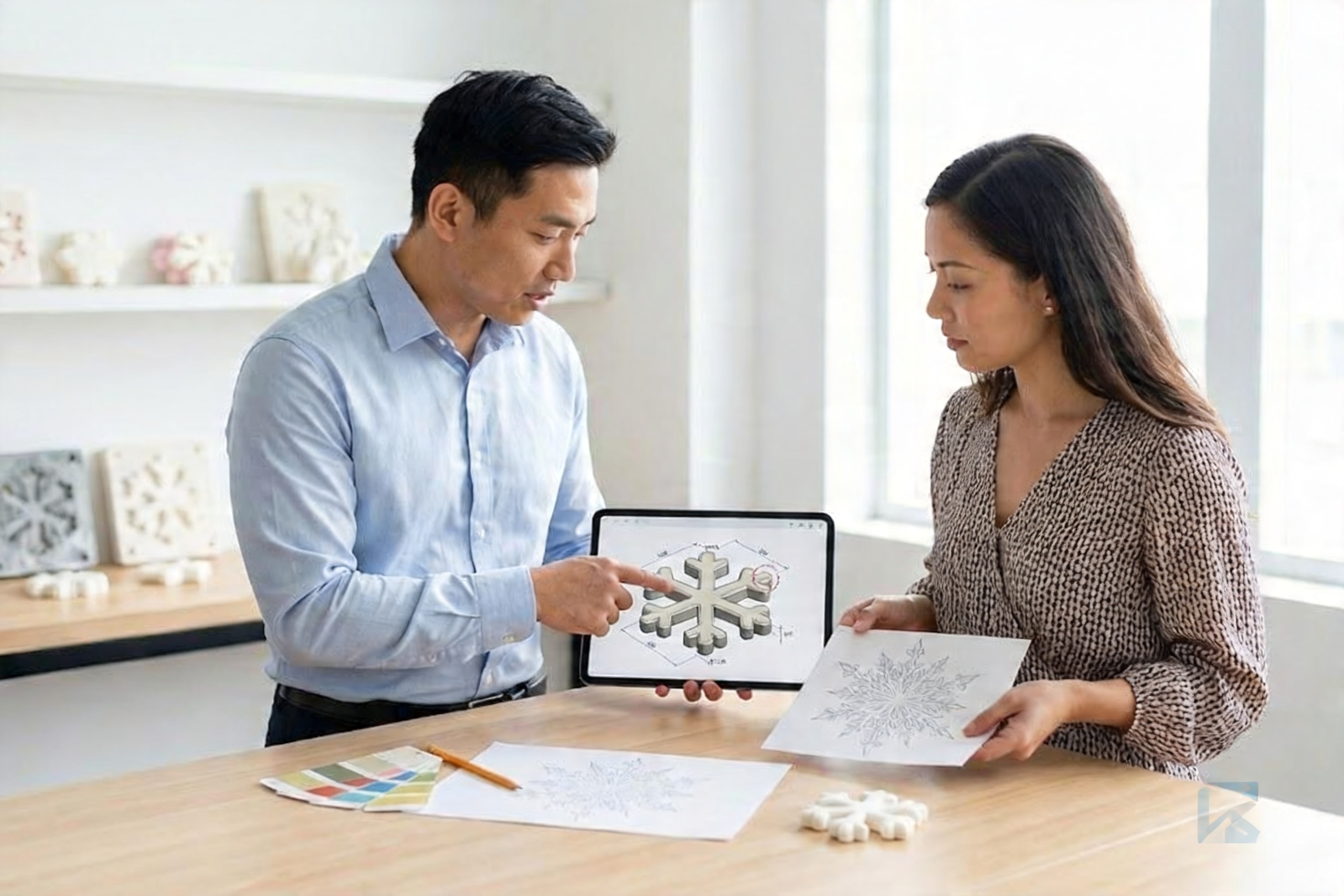
The best projects I've worked on always start with a simple conversation. A while back, a video game company approached us. They wanted a marshmallow shaped like their popular game controller for a launch event. The initial sketch had tiny joysticks, multiple small buttons, and complex curves. If they had sent this to us as a final design, we would have had to reject it. Instead, they asked us, "Can we make this?" That question changed everything. Our mold engineer joined the first call. He explained that the tiny joysticks would break off. He suggested we represent the buttons as shallow, rounded bumps instead of separate pieces. We worked together on a revised sketch. Our team then created a 3D model6 to show them exactly how the simplified, manufacturable version would look. They loved it. We produced a test mold, and the first samples were nearly perfect. This is the ideal workflow. It saves everyone time, money, and frustration. It turns a potential "no" into a definite "yes."
Which Design Details Matter Most for Manufacturing?
You are ready to brief your designer, but you are not sure what technical rules to give them. What specific details make a design good or bad for marshmallow production?
The most critical details are line thickness, corner sharpness, structural simplicity7, and color count8. Bold, simple shapes with soft corners and minimal colors will always be the most successful and cost-effective to produce at scale.
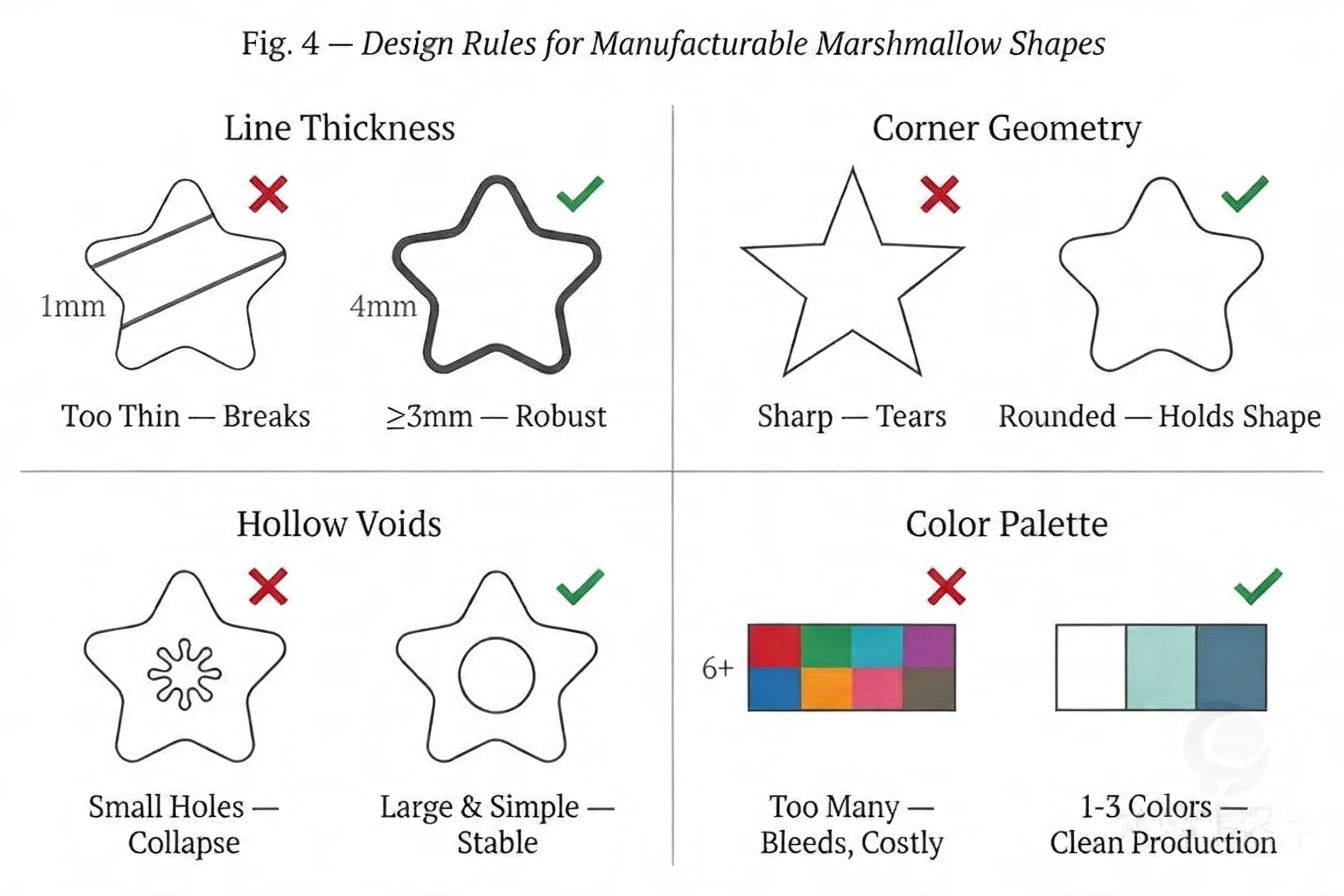
Think of marshmallow batter like very thick, sticky, bubbly paint. You need to pour it into a mold and then get it out without breaking it. This is where the design details9 become so important. We aren't just making one; we are making thousands, so the process needs to be repeatable and efficient. If a shape has a high failure rate, the cost for each "good" marshmallow goes way up. I always advise clients to think in terms of a "toddler-friendly" version of their logo. Can a toddler draw it with a fat crayon? If so, it will probably make a great marshmallow. Sharp, pointy bits get rounded off. Thin, spidery lines get thickened. Complex patterns get simplified. This isn't about compromising your brand; it's about translating it into a new, delicious medium.
Key Design Rules for Marshmallows
Here is a simple guide you can share with your designer to help them understand the manufacturing constraints from the start.
| Design Element | The Challenge in Production | The Solution / Best Practice |
|---|---|---|
| Line Thickness | Thin lines (<3mm) are fragile. They break easily when the marshmallow is removed from the starch mold. | Keep all lines and parts of the shape thick and robust. Aim for a minimum thickness of 3-4mm everywhere. |
| Corners & Angles | Sharp, acute angles are hard to fill completely and create weak points that can tear during demolding. | Round all corners. Use soft curves instead of sharp points. Think "bubble letters" instead of a spiky font. |
| Holes & Voids | Small, intricate holes will often collapse or fill in as the aerated marshmallow3 batter settles and sets. | Avoid small internal cutouts. If a hole is essential (like for a key shape), make it large and simple. |
| Color Count | Each color is a separate step in the production process. Too many colors can lead to bleeding and significantly increase costs. | Limit your design to 1-3 colors maximum. Use simple color blocking rather than intricate, overlapping patterns. |
How Can a Manufacturer Help Before the Design is Even Finalized?
You might think you only call a factory when you are ready to order. How can they possibly help when you only have a rough idea or a preliminary sketch?
A true manufacturing partner acts as a free consultant during your creative phase. By reviewing your initial concept, their engineers can immediately spot potential production problems10 and suggest solutions, saving you weeks of redesigns and wasted art fees.
This is my favorite part of the job. A brand comes to us with a dream. Our job is to make that dream a reality. We don't just see ourselves as a factory that takes orders; we see ourselves as problem-solvers. Because we have our own in-house mold development team, our feedback loop is incredibly fast. When you show us your sketch of a mascot, our mold engineer doesn't just see a picture. He sees the flow of the marshmallow batter, the potential air pockets, the stress points during demolding. He will immediately say, "This part is too thin, it will break. We need to thicken it. The angle here is too sharp; let's soften that curve." We can take your 2D drawing and quickly create a 3D rendering of the manufacturable version. This lets you see and approve the necessary changes before a single dollar is spent on tooling. This early-stage collaboration is the single most important factor in a successful custom product launch. It’s about anticipating problems and designing them out from the start.
Conclusion
Great custom marshmallow1s are co-created, not just designed. Partner with your manufacturer from the start to bring your vision to life without costly production problems10 and delays.
Explore this resource to understand the entire process of creating custom marshmallows from concept to production. ↩
Learn about the intricacies of marshmallow manufacturing to better inform your design choices. ↩
Learn about the unique properties of aerated marshmallows and their impact on design. ↩
Understand the role of mold engineering in creating successful food products like marshmallows. ↩
Understand the risks associated with poor design choices and how to mitigate them. ↩
Explore the importance of 3D modeling in visualizing and refining product designs. ↩
Explore the benefits of keeping designs simple for manufacturability and cost-effectiveness. ↩
Understand how limiting colors can streamline production and reduce costs. ↩
Find out which design elements can make or break your custom marshmallow project. ↩
Gain insights into potential issues you might encounter and how to avoid them. ↩