Ever wonder about those cute marshmallows? It's a complex process. You might think it's simple, but getting the perfect shape and detail is a real factory challenge.
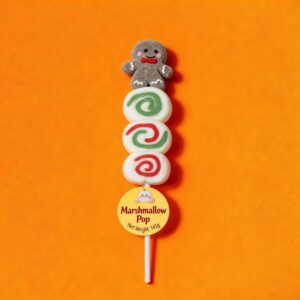
Shaped marshmallows1 are made by pouring a cooked sugar syrup2 into custom-designed molds3. After setting, they are often decorated by hand with intricate piping to create detailed designs like animals or characters. The process combines precise machinery with skilled handiwork for the final look.
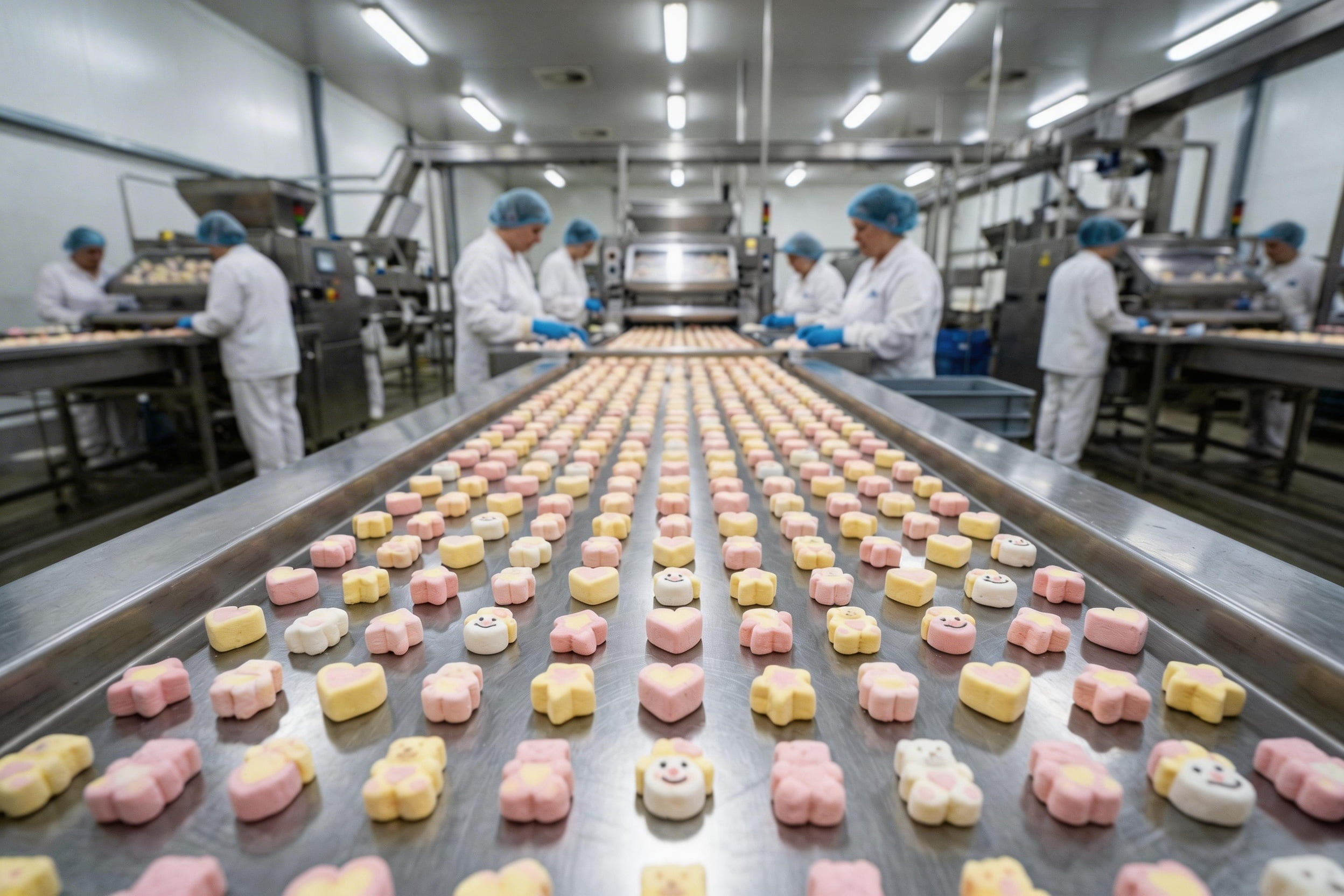
That's the quick answer, but the real magic is in the details. The journey from a simple idea to a finished, packaged treat is more involved than most people think. Let's walk through the entire process together. I want to show you exactly how we bring these sweet creations to life in our factory, step by step.
How Does a 2D Drawing Become a 3D Marshmallow Mold?
Turning a flat design into a physical mold is tricky. A bad mold means a bad marshmallow. We make sure every detail is captured perfectly from the start.
First, we finalize a 2D design with the client. Then, our expert mold designer translates this into a 3D model for the mold. After creating a test mold4 and making adjustments, we produce the molds in bulk for the production line.
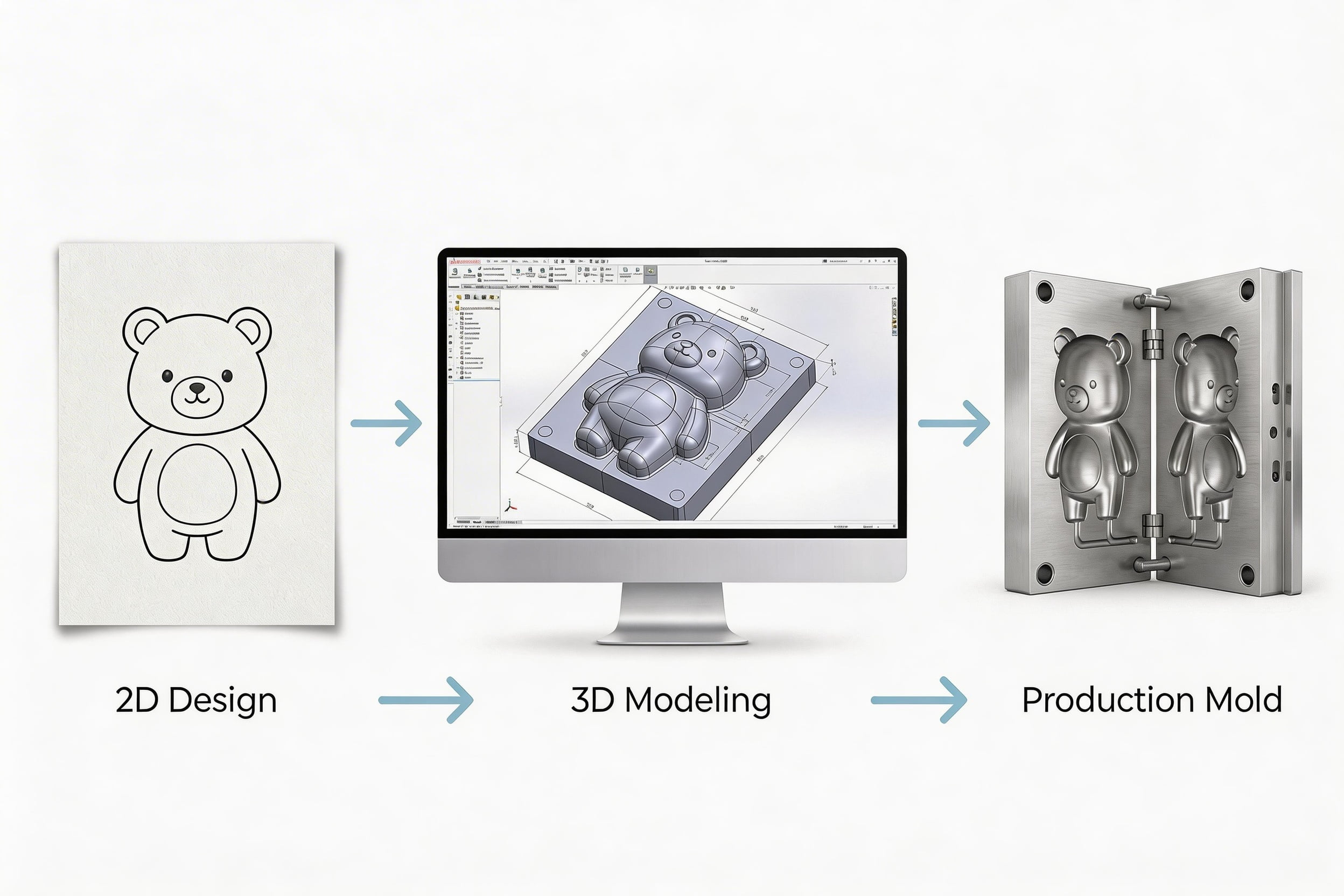
This initial stage is maybe the most important part of the entire process. Everything that follows depends on getting this right. It all starts with the mold designer, and their role is absolutely critical.
The Designer's Critical Role
I can't stress this enough: a great mold designer is an artist and an engineer combined. They don't just trace a 2D drawing. They have to think about how the hot, liquid marshmallow syrup will flow into the mold. They consider things like draft angles, which help the marshmallow pop out cleanly later. If an angle is wrong, the marshmallow will tear when we try to remove it. Their experience and aesthetic sense are vital. I remember a project for a client who wanted a very detailed unicorn shape. The first designer we had on it made a mold that looked perfect, but the horn wouldn't fill correctly. A more experienced designer took over, made a tiny adjustment to the airflow and syrup entry point, and it worked perfectly. That's the difference experience makes.
From Digital to Physical
The journey from a drawing to a production-ready mold follows a strict path to ensure quality. It's a blend of digital craftsmanship and physical trials.
| Step | Description | Key Consideration |
|---|---|---|
| 1. 2D Design Approval | The client provides or approves the final artwork. | Are the lines clear? Are the details feasible? |
| 2. 3D Mold Design | Our designer creates a 3D model for the mold. | Syrup flow, easy release, and final puffed look. |
| 3. Test Mold Creation | A single or small batch of molds is made for testing. | Is it accurate to the 3D model? |
| 4. Syrup Trial | We run a real test with our marshmallow recipe. | Does it fill correctly? Does it release cleanly? |
| 5. Fine-Tuning | We make small adjustments based on the trial results. | Perfecting every curve and detail. |
| 6. Mass Production | The final mold design is used to create all production molds. | Consistency across thousands of molds. |
What Happens on the Marshmallow Production Line?
You have the molds, but what about the marshmallow itself? The wrong recipe or pouring technique can ruin everything. We have perfected this process over many years.
We start by cooking a precise sugar syrup to the right temperature. This hot mixture is then poured, or "deposited," into the custom molds. The marshmallows then travel through a cooling and setting area to achieve their signature soft, chewy texture.
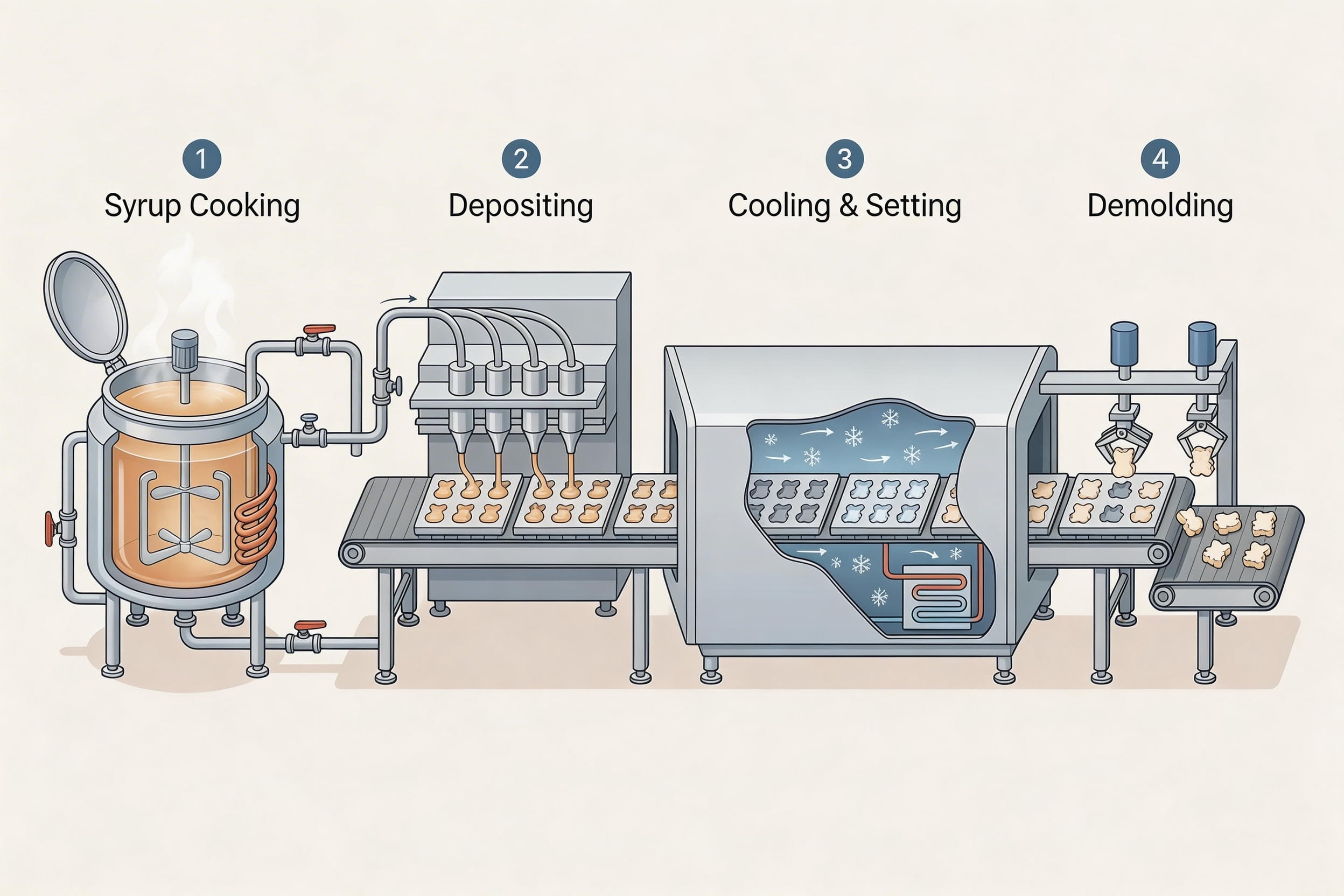
Once the molds are ready, the real factory work begins. This is where we make the actual marshmallow. It’s a process of precision, temperature control, and timing. Our BRC and GMP certifications5 guide every action here, ensuring everything is hygienic and controlled.
Cooking the Perfect Syrup
Making marshmallow syrup is a science. It isn't just sugar and water. We use a specific recipe that includes gelatin, glucose syrup, sugar, and our custom flavorings. Everything goes into large, jacketed kettles6 that allow us to control the temperature with extreme precision. This is critical. If the syrup is too hot, the marshmallow will be hard. If it's too cool, it won't set properly and will be a sticky mess. I learned this the hard way early on when an entire batch was ruined because the temperature was off by just a few degrees. Now, our process is automated and monitored constantly to prevent that from ever happening again.
The Art of Depositing
After the syrup is cooked, it’s transferred to a depositor machine7. This machine has a series of nozzles that line up perfectly with the molds below. It pours a precise amount of syrup into each mold cavity. We have to calibrate the machine for every different shape. A small, simple shape needs a quick pour. A large, complex shape needs a slower, more controlled flow to make sure the syrup gets into every little corner without trapping air bubbles. This is where speed and accuracy come together.
| Stage | Action | Why It's Important |
|---|---|---|
| Syrup Cooking | Ingredients are mixed and heated to an exact temperature. | This determines the final texture, bounce, and shelf life. |
| Depositing | The hot syrup is poured into the molds by the depositor machine7. | This ensures every marshmallow is a uniform size and shape. |
| Setting/Curing | Molds travel through a climate-controlled tunnel8 to cool and set. | This allows the gelatin to work its magic and form the structure. |
| Demolding | The set marshmallows are removed from the molds. | A well-designed mold and a light starch coating make this step clean. |
How Are the Final Details Added to Shaped Marshmallows?
A plain white shape isn't a cute character. The details make all the difference. But adding them by hand is slow and difficult. Here's how we do it.
This is where the artistry comes in. Our skilled team uses piping bags to hand-decorate9 the marshmallows with colored icing, adding eyes, mouths, and other fine details. This step is crucial for bringing the character to life and meeting the client's exact design specifications.
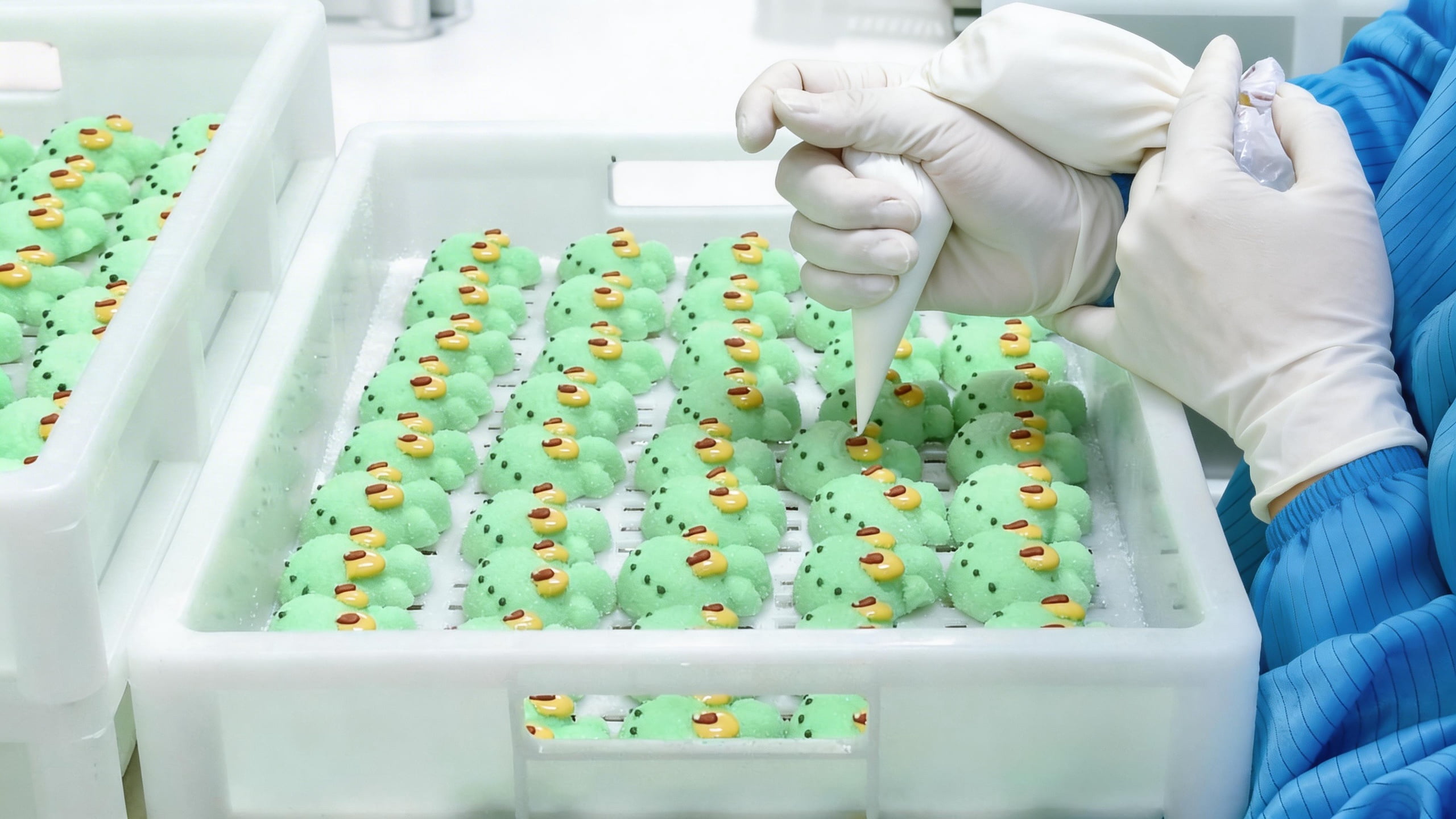
After the marshmallows are set and removed from their molds, they are just blank shapes. This final stage is where we give them personality. For us, this step is just as important as the mold design.
The Importance of Skilled Piping
This part of the process is pure handiwork. Our decorators are true artists. They need a steady hand, a great eye for detail, and a lot of patience. We provide extensive training to ensure consistency. Imagine a large order for a retail client in Europe. They might order 100,000 ghost-shaped marshmallows for Halloween. Each one needs two eyes and a mouth. Our team has to pipe every single one of those details consistently. It's a huge challenge of skill and quality control. This is also where our SMETA social audit certification10 is important to us. It shows our commitment to our workers, ensuring they have a safe and healthy environment to perform this detailed, skilled work.
Packaging for Freshness and Appeal
Finally, we package the product. Packaging does three jobs: it keeps the marshmallow safe and fresh, it protects the delicate decorations, and it looks great on a store shelf. For our OEM and private label clients, we offer fully custom solutions11. We can design and source custom-printed bags, boxes, or tubs that fit their brand. The packaging has to be strong enough to protect the product during shipping from our factory in China all the way to a warehouse in the United States. We manage this entire process, making it a one-stop-shop for our customers.
| Finishing Step | Method | Goal |
|---|---|---|
| Piping/Decoration | Skilled workers use piping bags with colored royal icing. | To add the fine details that bring the character to life. |
| Quality Check | Each decorated piece is inspected for accuracy and neatness. | To ensure we meet the client's standards and our own. |
| Packaging | Marshmallows are sealed in food-safe, client-specified packaging. | To guarantee food safety, freshness, and brand appeal. |
| Final Boxing | The individual packages are placed into master cartons for shipping. | To protect the product during long-distance global transport. |
Conclusion
Making shaped marshmallows is a detailed process. It blends precise engineering with skilled artistry to create the final, delightful product that you see and love.
Discover the fascinating process behind creating shaped marshmallows and the artistry involved. ↩
Learn about the science of cooking sugar syrup, a crucial step in marshmallow production. ↩
Explore how custom molds are created to shape marshmallows perfectly. ↩
Discover the purpose of creating test molds before mass production. ↩
Understand the importance of BRC and GMP certifications for food safety. ↩
Find out how jacketed kettles help control temperature in syrup cooking. ↩
Learn about the role of depositor machines in shaping marshmallows. ↩
Discover how climate-controlled tunnels ensure proper setting of marshmallows. ↩
Explore the artistry involved in hand-decorating marshmallows for character. ↩
Understand the significance of SMETA certification for worker safety and rights. ↩
Explore how custom packaging enhances the appeal and safety of marshmallows. ↩